
1. Introduction
The TAMIYA TS-71 Smoke Lacquer Spray Paint is a specialized acrylic resin spray designed for model building. This product provides a transparent glossy smoke finish suitable for various materials. This manual provides essential information for safe and effective use of the product.
Intended Use: This spray paint is formulated for use on plastic, wood, metal, glass, and ceramic surfaces, primarily in model building applications. It is ideal for creating tinted effects on model car windows or other transparent parts.
2. Safety Information
DANGER! This product is an extremely flammable aerosol. The container is pressurized and may burst if heated. Always adhere to the following safety precautions:
- Causes skin irritation.
- Causes serious eye damage.
- Harmful if inhaled.
- May cause drowsiness or dizziness.
- Repeated exposure may cause skin dryness or cracking.
- Keep out of reach of children.
- Keep away from heat, hot surfaces, sparks, open flames, and other ignition sources. No smoking.
- Do not spray on an open flame or other ignition source.
- Do not pierce or burn, even after use.
- Wear protective gloves, protective clothing, eye protection, and face protection.
- Store locked up.
- Protect from sunlight. Do not expose to temperatures exceeding 50°C (122°F).
- Dispose of contents and container to an appropriate recycling or disposal facility in accordance with local regulations.
Proposition 65 Warning: This product may contain chemicals known to the State of California to cause cancer and birth defects or other reproductive harm.

Image 1: Side of the TAMIYA TS-71 Smoke spray can displaying safety warnings and hazard pictograms (flammable, irritant, general hazard).
3. Setup and Preparation
3.1 Workspace Preparation
- Work in a well-ventilated area, preferably outdoors or in a spray booth.
- Protect surrounding areas from overspray using drop cloths or newspaper.
- Ensure the ambient temperature is at room temperature for optimal application (approximately 20-25°C or 68-77°F).
3.2 Surface Preparation
- Ensure the surface to be painted is clean, dry, and free from dust, grease, oil, or other contaminants.
- For best adhesion on plastic and metal, a suitable primer may be applied first, though this lacquer can be used directly on ABS and Styrene plastic.
- Lightly sand smooth surfaces if necessary to provide a key for the paint.
3.3 Can Preparation
- Shake the spray can vigorously for at least one minute before use to ensure proper mixing of the paint. Continue shaking periodically during application.
4. Operating Instructions
4.1 Application
- Hold the spray can approximately 30 cm (12 inches) from the surface to be painted.
- Apply the paint in several thin, even coats. Avoid applying a thick single coat, as this can lead to runs or an uneven finish.
- Move the can smoothly and consistently across the surface, overlapping each pass slightly.
- For a darker smoke effect, apply additional thin layers. The color deepens with each subsequent coat.
- Always spray in a well-ventilated area.

Image 2: Side of the TAMIYA TS-71 Smoke spray can detailing application instructions in German, including shaking before use and applying thin layers.
4.2 Drying Time
- The paint dries relatively fast.
- Allow sufficient drying time between coats (typically 10-15 minutes, depending on humidity and temperature).
- For full curing and durability, allow 12-24 hours of drying time before handling the painted object extensively.
5. Maintenance and Storage
5.1 Post-Use Cleaning
- After each use, invert the can and spray for a few seconds until only clear propellant comes out. This clears the nozzle and prevents clogging.
- Wipe the nozzle clean with a cloth.
5.2 Storage
- Store the can in a cool, dark place, away from direct sunlight and heat sources.
- Ensure the storage area does not exceed 50°C (122°F).
- Keep the can tightly capped when not in use.

Image 3: Top of the TAMIYA TS-71 Smoke spray can, showing the color and finish, along with storage instructions in Japanese.
6. Troubleshooting
- Clogged Nozzle: If the nozzle clogs, remove it and soak it in lacquer thinner. If it remains clogged, replace it with a new nozzle. Always clear the nozzle after use as described in Section 5.1.
- Uneven Finish/Runs: This usually occurs from applying too much paint in one coat or holding the can too close. Apply lighter, more even coats from the recommended distance.
- Poor Adhesion: Ensure the surface is thoroughly cleaned and prepared. For challenging surfaces, consider using a compatible primer.
- Paint Not Drying: Ensure adequate ventilation and appropriate room temperature. High humidity can prolong drying times.
7. Specifications
| Feature | Detail |
|---|---|
| Product Name | TAMIYA TS-71 Smoke Lacquer Spray Paint |
| Model Number | TAM85071 (Part Number 85071) |
| Color | Smoke (Color Code: #D3D3D3) |
| Finish Type | Gloss |
| Item Form | Aerosol |
| Volume | 100 Milliliters (3.38 Fl Oz) |
| Specific Uses | Model building (Car, Plastic, Wood, Metal, Glass, Ceramics) |
| Surface Recommendation | Metal, Plastic |
| Special Feature | Washable (after curing) |
| Water Resistance Level | Water Resistant (after curing) |
| Product Dimensions | 2.05 x 2.05 x 4.21 inches |
| Item Weight | 0.005 ounces |
| Manufacturer | Tamiya |
| UPC / EAN | 4950344073665 |
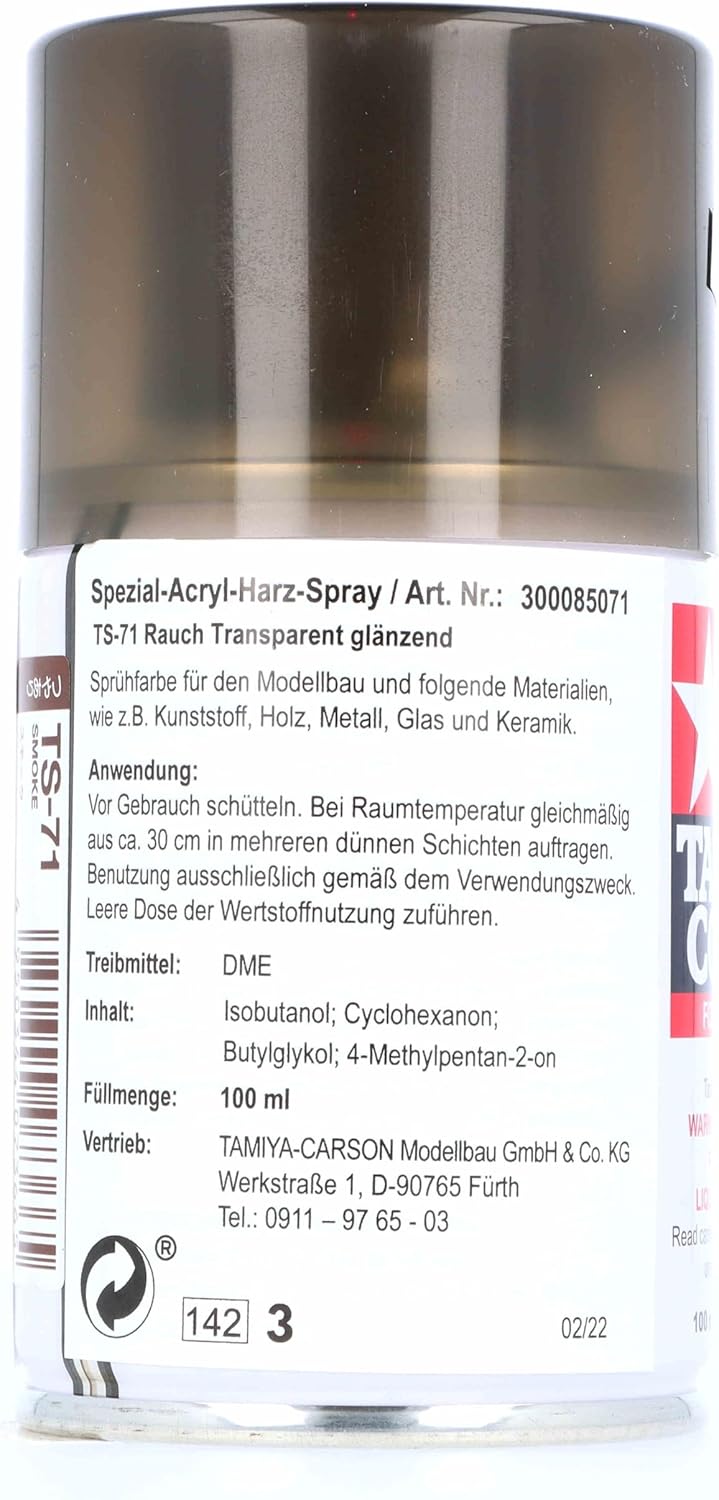
Image 4: Side of the TAMIYA TS-71 Smoke spray can showing product details, ingredients, and barcode (UPC/EAN: 4950344073665).
8. Disposal
Dispose of the empty container and any remaining product in accordance with local regulations for hazardous waste or aerosol cans. Do not puncture or incinerate the can, even when empty.
9. Warranty and Support
For specific warranty information or technical support, please contact TAMIYA customer service directly. Contact details can typically be found on the manufacturer's official website or product packaging.