
Silverline 250422
Silverline Tools 250422 Bow Saw User Manual
Model: 250422 | Brand: Silverline
1. Introduction
Thank you for choosing the Silverline Tools 250422 Bow Saw. This manual provides essential information for the safe and effective use, assembly, maintenance, and troubleshooting of your new bow saw. Please read this manual thoroughly before first use and keep it for future reference.
The Silverline 250422 Bow Saw is designed for cutting wood, branches, and logs. It features a sturdy round frame, a hardened and tempered carbon steel blade, and a comfortable handle with an integrated guard.
2. Safety Information
Always prioritize safety when using any hand tool. Failure to follow these safety guidelines may result in injury or damage to the tool.
- Wear appropriate personal protective equipment (PPE): Always wear safety glasses to protect your eyes from sawdust and debris. Gloves are recommended for better grip and hand protection.
- Inspect the saw before each use: Ensure the blade is securely tensioned and free from damage. Do not use the saw if the blade is loose, bent, or cracked.
- Secure your workpiece: Always ensure the material you are cutting is stable and cannot shift during operation. Use clamps or a vise if necessary.
- Maintain a firm grip: Hold the saw firmly with both hands (if applicable) to maintain control.
- Keep bystanders clear: Ensure no one is in the cutting path or in a position to be struck by falling debris.
- Cut away from your body: Always position yourself so that the saw blade moves away from your body during the cutting stroke.
- Do not force the cut: Allow the saw's teeth to do the work. Excessive force can cause the blade to bind, bend, or break.
- Store safely: When not in use, store the saw in a dry place, out of reach of children. Consider using a blade guard to protect the teeth and prevent accidental injury.
3. Components
The Silverline 250422 Bow Saw consists of the following main components:
- Frame: The sturdy, round metal structure that holds the blade under tension.
- Blade: The hardened and tempered carbon steel cutting edge with teeth.
- Handle: The ergonomic grip, often with an integrated hand guard for safety.
- Tensioner: A mechanism (e.g., wing nut or lever) used to apply and release tension on the blade for secure cutting and easy blade changes.

Figure 3.1: Overview of the Silverline 250422 Bow Saw, showing its main components including the frame, blade, handle, and tensioning mechanism.
4. Setup and Blade Installation
Your bow saw may come partially assembled or require blade installation. Follow these steps to ensure proper setup:
- Unpack: Carefully remove all components from the packaging.
- Identify Blade Ends: Note the two pins or holes at each end of the blade.
- Loosen Tensioner: If the blade is not installed, or if you are replacing it, loosen the blade tensioner (typically a wing nut or lever) until the frame is slightly relaxed.
- Insert Blade: Align one end of the blade with the pin/slot on one side of the frame. Insert the blade pin into the corresponding hole on the frame.
- Tension Blade: Carefully flex the frame slightly to align the other end of the blade with the remaining pin/slot. Insert the second blade pin. Once both ends are secured, tighten the tensioner firmly. The blade should be taut and straight, without excessive wobble. A properly tensioned blade will produce a clear ringing sound when plucked.
- Check Blade Direction: Ensure the saw teeth are pointing forward, away from the handle, for effective cutting on the push stroke (or pull stroke, depending on blade type, but typically push).
5. Operating Instructions
Follow these steps for safe and effective cutting with your bow saw:
- Prepare Workpiece: Ensure the material to be cut is stable and elevated if possible, to allow for full saw strokes without hitting the ground.
- Grip the Saw: Hold the handle firmly with one hand, ensuring your fingers are protected by the integrated guard. For larger cuts or more control, use your other hand to support the frame near the front.
- Start the Cut: Place the blade on the cutting line. Use a few short, gentle pull strokes to create a groove, which will help guide the saw and prevent it from slipping.
- Sawing Motion: Apply steady, even pressure on the push stroke (or pull stroke, depending on blade type) and allow the saw to cut. Do not apply excessive downward force; let the sharpness of the blade do the work. Use the full length of the blade with each stroke for maximum efficiency.
- Maintain Control: Keep your body balanced and maintain a stable stance. Be aware of the material's weight and how it might shift as you cut through it.
- Avoid Binding: If the saw binds, it means the cut is closing on the blade. You may need to wedge the cut open slightly or adjust your cutting angle. Never force a bound saw.
- Finishing the Cut: As you approach the end of the cut, support the falling piece to prevent it from tearing or splintering the main workpiece, and to avoid the saw binding or pinching.
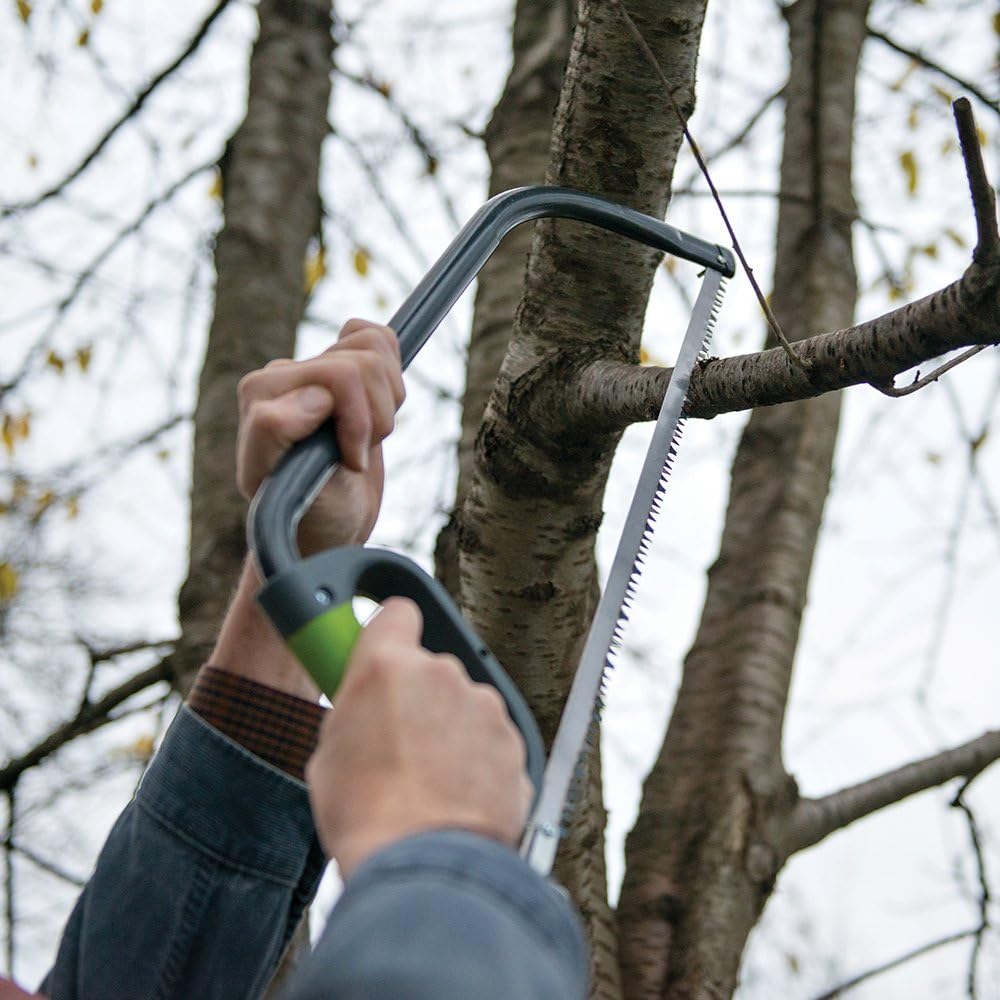
Figure 5.1: Proper technique for using the Silverline 250422 Bow Saw to cut a tree branch, demonstrating a firm grip and controlled motion.
6. Maintenance
Regular maintenance will extend the life of your Silverline Bow Saw and ensure optimal performance.
- Clean After Use: After each use, wipe the blade and frame clean of sawdust, sap, and debris. A damp cloth can be used, followed by a dry cloth.
- Lubricate Blade: Apply a light coat of rust-preventative oil to the blade, especially if storing for extended periods or in humid conditions.
- Check Blade Tension: Periodically check that the blade remains properly tensioned. Re-tension if it feels loose.
- Blade Replacement: Replace the blade when it becomes dull, bent, or damaged. Refer to Section 4 for blade installation instructions. Ensure you use a compatible replacement blade (600mm / 24-inch bow saw blade).
- Storage: Store the saw in a dry, protected area. Hanging the saw can help prevent damage to the blade. Consider using a blade guard for safety.
7. Troubleshooting
Here are some common issues and their solutions:
| Problem | Possible Cause | Solution |
|---|---|---|
| Saw binds in cut | Wood closing on blade; dull blade; improper technique. | Wedge the cut open; replace blade; ensure full, even strokes. |
| Blade wobbles or cuts crooked | Insufficient blade tension; bent blade; worn blade. | Tighten tensioner; replace bent blade; replace worn blade. |
| Saw requires excessive force to cut | Dull blade; incorrect blade type for material. | Replace blade; ensure blade teeth are sharp and appropriate for wood. |
| Rust on blade/frame | Improper storage; lack of lubrication. | Clean and apply rust-preventative oil; store in a dry environment. |
8. Specifications
| Feature | Detail |
|---|---|
| Model Number | 250422 |
| Brand | Silverline |
| Blade Material | Hardened and Tempered Carbon Steel |
| Recommended Surface | Wood |
| Overall Dimensions (approx.) | 69 x 21.5 x 3 cm (27.2 x 8.5 x 1.2 inches) |
| Blade Length (approx.) | 600 mm (24 inches) |
| Weight (approx.) | 286 g (0.63 lbs) |
| Special Features | Easy release tensioner for quick blade changes, integrated handle guard. |
9. Warranty and Support
Silverline Tools are manufactured to high standards and undergo rigorous quality control. While specific warranty details may vary by region and retailer, Silverline typically offers a lifetime guarantee on all hand tools. Please retain your proof of purchase for any warranty claims.
For technical support, replacement parts, or warranty inquiries, please contact your retailer or visit the official Silverline Tools website. Contact information can usually be found on the product packaging or the brand's official website.
Ask a question about this manual
Ask about setup, troubleshooting, compatibility, parts, safety, or missing instructions. Manuals+ will review the question and use this page’s manual context to help answer it.