
Four Seasons 57332
Four Seasons 57332 Remanufactured AC Compressor User Manual
Model: 57332 | Brand: Four Seasons
Introduction
This manual provides essential information for the proper handling, installation, operation, and maintenance of your Four Seasons 57332 Remanufactured AC Compressor. This component is designed to restore the air conditioning function in compatible automotive systems. Please read this manual thoroughly before proceeding with any installation or service.
Safety Information
WARNING: Automotive air conditioning systems contain refrigerants under high pressure. Improper handling can lead to serious injury, including frostbite, chemical burns, or eye damage. Always wear appropriate personal protective equipment (PPE) such as safety glasses and gloves when working with AC systems.
- Installation and service should only be performed by qualified automotive technicians with proper tools and knowledge of AC systems.
- Never discharge refrigerant into the atmosphere. Always use proper recovery and recycling equipment.
- Ensure the vehicle's battery is disconnected before beginning any work on the AC system.
- Verify that the replacement compressor is the correct part for your vehicle's make, model, and year.
- Handle the compressor with care to avoid damage to seals, ports, and the clutch assembly.
Product Overview
The Four Seasons 57332 is a remanufactured AC compressor, an integral part of your vehicle's air conditioning system. Its primary function is to compress refrigerant gas, circulating it through the system to facilitate heat exchange and provide cooling.
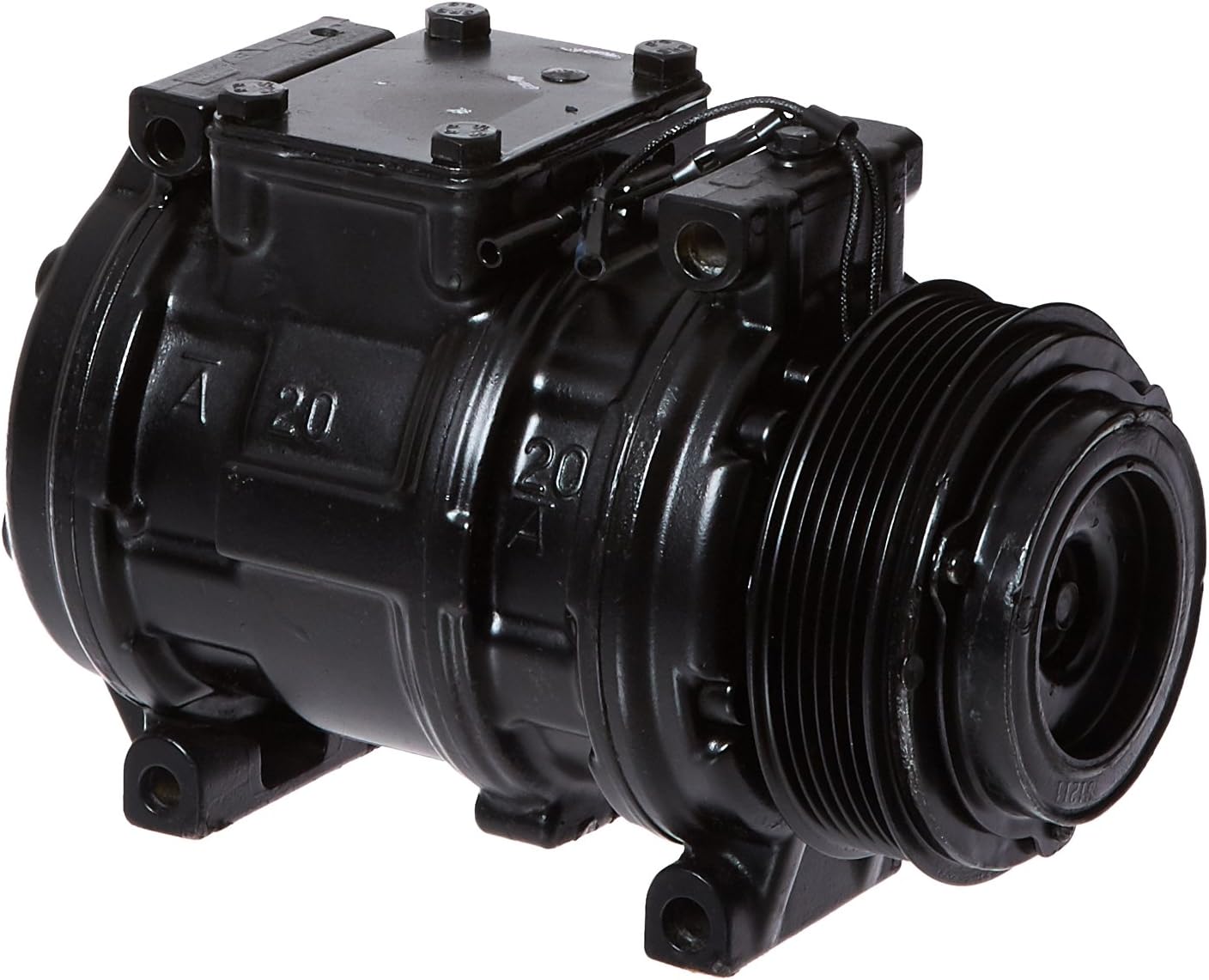
Image: Front view of the Four Seasons 57332 Remanufactured AC Compressor. This image displays the main body of the compressor, the pulley, and the clutch assembly.
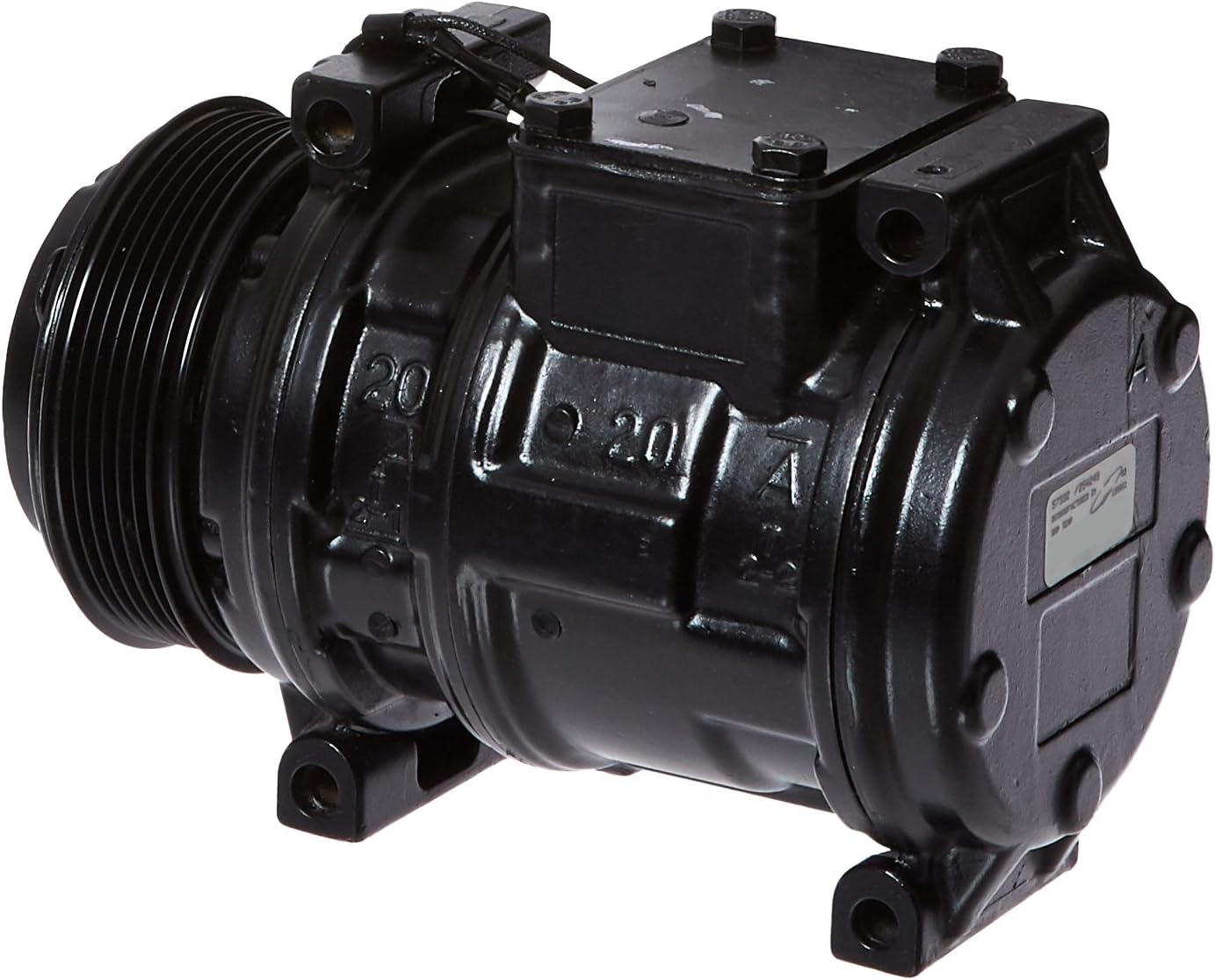
Image: Side view of the Four Seasons 57332 Remanufactured AC Compressor. This angle provides a clearer view of the mounting points and refrigerant ports.
Key Features:
- Remanufactured to meet or exceed OEM specifications.
- Designed for direct fit and easy installation.
- Includes A/C Compressor unit.
Installation Guidelines
Proper installation is critical for the longevity and performance of your new AC compressor. It is highly recommended that this procedure be performed by a certified automotive AC technician.
- System Evacuation: Before removing the old compressor, the AC system must be completely evacuated of all refrigerant using a certified recovery machine.
- System Flushing: The entire AC system (condenser, evaporator, lines) must be thoroughly flushed to remove any contaminants, debris, or old oil. Failure to flush the system can lead to immediate failure of the new compressor.
- Oil Management: The new compressor comes pre-filled with the correct amount and type of PAG oil. Consult your vehicle's service manual for the exact oil capacity and type required for your specific system. Adjust oil levels as necessary, accounting for oil remaining in other system components.
- Component Replacement: It is strongly recommended to replace the accumulator/receiver drier and expansion valve/orifice tube whenever the compressor is replaced. These components can harbor contaminants and moisture that will damage the new compressor.
- Installation: Install the new compressor, ensuring all mounting bolts are torqued to manufacturer specifications. Connect all lines and electrical connections securely.
- Vacuum and Leak Test: After installation, pull a deep vacuum on the system for at least 30-45 minutes to remove all air and moisture. Perform a leak test to ensure there are no refrigerant leaks.
- Refrigerant Recharge: Recharge the system with the correct type and amount of refrigerant (e.g., R-134a) according to the vehicle manufacturer's specifications. Do not overcharge or undercharge the system.
Operating Principles
The AC compressor is the heart of your vehicle's air conditioning system. When the AC system is activated, the compressor draws in low-pressure, low-temperature gaseous refrigerant from the evaporator. It then compresses this gas, increasing its pressure and temperature, and pushes it to the condenser. In the condenser, the high-pressure, high-temperature gas releases heat to the outside air and condenses into a high-pressure liquid. This liquid then flows through the expansion valve/orifice tube, where its pressure drops, causing it to flash into a low-pressure, low-temperature gas/liquid mixture before entering the evaporator to absorb heat from the cabin air, completing the cycle.
Maintenance
While the AC compressor itself requires minimal direct maintenance, regular maintenance of the overall AC system is crucial for its longevity and efficient operation:
- Regular Inspections: Have your AC system inspected annually by a qualified technician to check for leaks, proper refrigerant levels, and overall system health.
- Refrigerant Levels: Ensure the system has the correct amount of refrigerant. Low refrigerant can cause the compressor to work harder and potentially fail prematurely.
- Condenser Cleaning: Keep the condenser fins clean and free of debris (leaves, dirt, bugs) to ensure efficient heat transfer.
- Cabin Air Filter: Replace your cabin air filter regularly to maintain good airflow and reduce strain on the system.
- Run AC Periodically: Even in cold weather, run your AC system for a few minutes once a month to keep seals lubricated and prevent refrigerant leaks.
Troubleshooting
If you experience issues with your vehicle's air conditioning system after compressor replacement, consider the following common problems. Professional diagnosis is recommended for accurate identification and repair.
| Problem | Possible Cause | Solution |
|---|---|---|
| No cold air or insufficient cooling | Low refrigerant charge, clogged expansion valve/orifice tube, faulty pressure switch, electrical issue, improper system flush. | Check refrigerant levels, inspect for leaks, verify electrical connections, ensure proper system flush was performed. Professional diagnosis required. |
| Compressor clutch not engaging | Low refrigerant pressure, faulty pressure switch, electrical issue (fuse, relay, wiring), faulty clutch coil. | Check refrigerant pressure, inspect electrical components, test clutch coil. |
| Unusual noise from compressor | Incorrect oil level/type, internal compressor damage, worn clutch bearing, foreign object in system, improper mounting. | Verify oil specifications, check mounting, professional inspection for internal damage. |
| Compressor cycles on and off rapidly | Low refrigerant charge, overcharge, faulty pressure switch, restricted airflow over condenser. | Check refrigerant levels, ensure condenser is clean, test pressure switches. |
Specifications
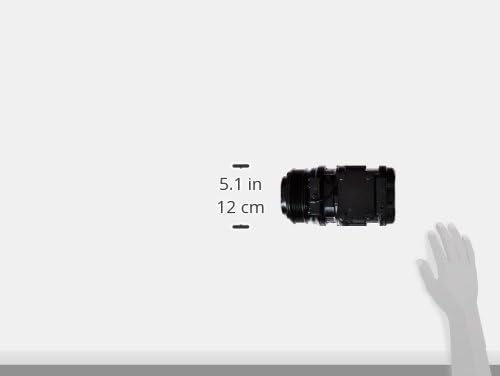
Image: Overhead view of the Four Seasons 57332 AC Compressor illustrating its approximate dimensions, showing a length of 12 cm (5.1 inches).
| Attribute | Detail |
|---|---|
| Brand | Four Seasons |
| Model Number | 57332 |
| Included Components | A/C Compressor |
| Item Weight | 16 Pounds (approx. 7.26 kg) |
| Product Dimensions | 12 x 8 x 8 inches (approx. 30.5 x 20.3 x 20.3 cm) |
| Manufacturer Part Number | 57332 |
| UPC | 096361573321 |
Warranty and Support
As a "Renewed" product, this Four Seasons 57332 AC Compressor is typically backed by the Amazon Renewed Guarantee. This guarantee provides a replacement or refund within 90 days of receipt if the product does not work as expected. For specific details regarding your warranty coverage and to initiate a return or support request, please refer to the Amazon Renewed program terms and conditions or contact Amazon customer service directly.
For technical inquiries or further product information, you may also contact Four Seasons, the original manufacturer of the compressor.
Important: Keep your purchase receipt and any related documentation for warranty purposes.
Ask a question about this manual
Ask about setup, troubleshooting, compatibility, parts, safety, or missing instructions. Manuals+ will review the question and use this page’s manual context to help answer it.