
1. Overview
This manual provides essential information for the proper installation, operation, and maintenance of the Cooper Bussmann LPN-RK-125SP Low-Peak Class RK1 Time Delay Fuse. This fuse is designed to protect electrical circuits from overcurrent conditions, specifically offering time-delay characteristics for circuits with motor loads or other inductive components that experience temporary inrush currents.
The LPN-RK-125SP is a dual-element, current-limiting, time-delay fuse, rated for 250V AC/DC and 125 Amps. It is suitable for a wide range of industrial and commercial applications where reliable circuit protection is critical.

Figure 1: Cooper Bussmann LPN-RK-125SP Time Delay Fuse. This image shows the cylindrical body of the fuse with blade terminals, indicating its robust construction for industrial applications.
2. Safety Information
WARNING: Electrical shock hazard. Improper installation or handling of electrical components can result in serious injury or death. Always follow local electrical codes and safety regulations.
- Ensure all power to the circuit is disconnected and locked out before installing, removing, or inspecting fuses.
- Only qualified personnel should perform electrical work.
- Use appropriate personal protective equipment (PPE), including insulated gloves and eye protection.
- Verify the fuse rating (voltage and amperage) matches the circuit requirements. Using an incorrect fuse can lead to equipment damage or fire.
- Do not bypass or tamper with fuses.
- Inspect fuses for physical damage before installation.
3. Specifications
The following table details the key specifications for the Cooper Bussmann LPN-RK-125SP fuse:
| Specification | Value |
|---|---|
| Model Number | LPN-RK-125SP |
| Brand | Cooper Bussmann |
| Fuse Amps | 125 Amps |
| Voltage Rating | 250V AC/DC |
| Fuse Class | RK1 (Low-Peak) |
| Speed | Time Delay (Dual Element) |
| Interrupt Rating | 300kA at 250VAC, 100kA at 250VDC |
| Body Material | Melamine |
| Body Style | Blade (Rejection) |
| Length | 7-1/8 inches |
| Diameter | 1-9/16 inches |
| Standards Met | CE, UL Special Purpose Guide JFHR, Guide JDDZ, File E4273, CSA Class 1422-02, File 53787, CSA C22.2, No. 248.12 |
| Material | Copper (terminals) |
| Item Weight | 12.8 ounces |
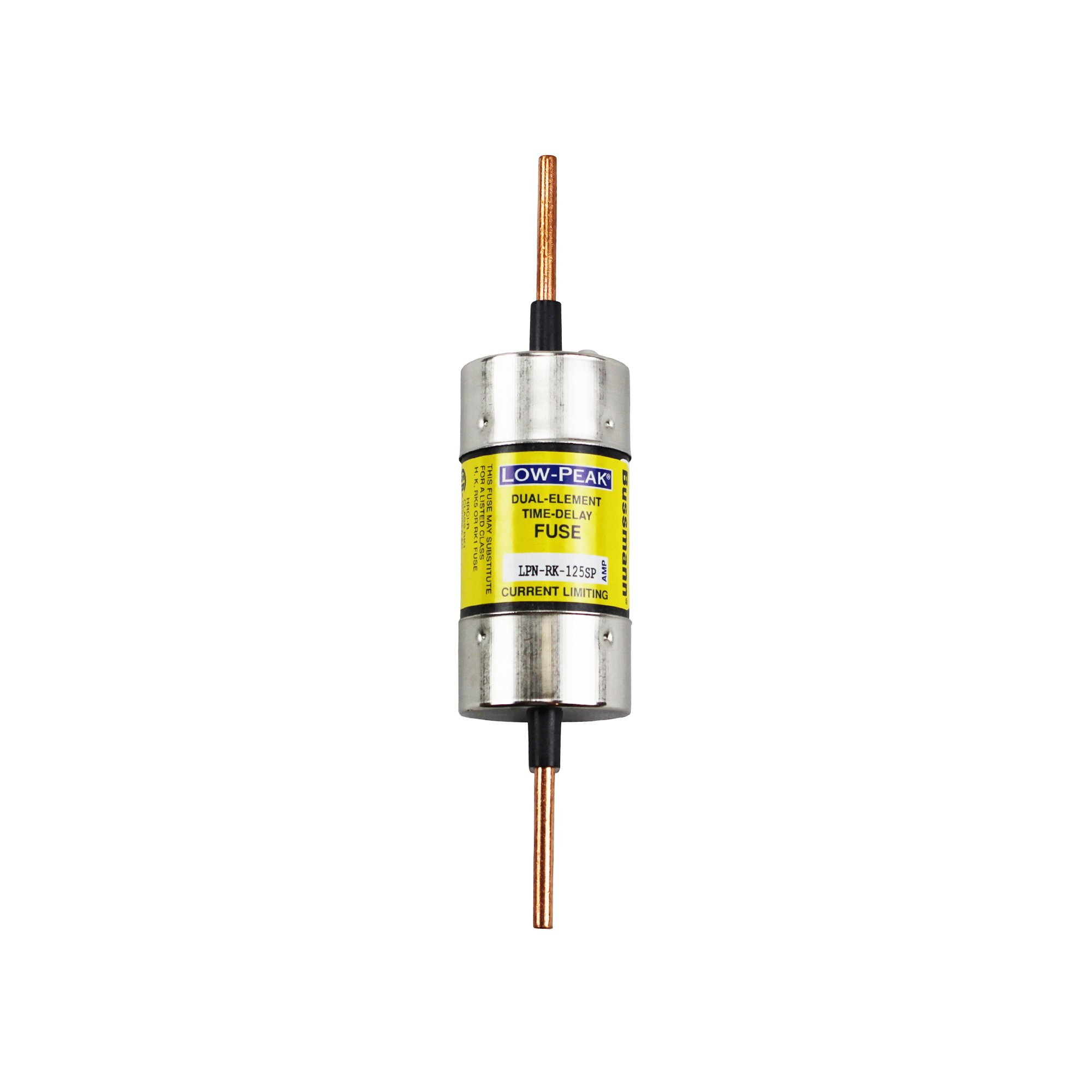
Figure 2: Packaging for the Bussmann LPN-RK-125SP fuse. The label displays the model number, "LOW-PEAK® CLASS RK1 FUSE", manufacturer details, and barcode.
4. Installation
Installation of the LPN-RK-125SP fuse should only be performed by a qualified electrician in accordance with all applicable national and local electrical codes.
- De-energize Circuit: Before beginning any work, ensure that the electrical circuit where the fuse will be installed is completely de-energized. Use appropriate lockout/tagout procedures to prevent accidental re-energization.
- Verify Fuse Holder: Confirm that the fuse holder or disconnect switch is designed for Class RK1 fuses and can accommodate the physical dimensions (7-1/8 inches length, 1-9/16 inches diameter) and electrical ratings (250V, 125A) of the LPN-RK-125SP. Class RK1 fuses have rejection features to prevent installation into lower-rated fuse holders.
- Inspect Fuse: Visually inspect the new fuse for any signs of damage, such as cracks in the body or bent blades. Do not install a damaged fuse.
- Insert Fuse: Carefully insert the fuse into the fuse holder. Ensure the blade terminals make firm and secure contact with the fuse clips. Do not force the fuse into place.
- Secure Fuse Holder: Close and secure the fuse holder or disconnect switch cover.
- Re-energize Circuit: Once installation is complete and verified, remove lockout/tagout devices and re-energize the circuit.
5. Operation
The Cooper Bussmann LPN-RK-125SP is a passive protective device. It operates by interrupting the flow of current in a circuit when an overcurrent condition occurs that exceeds its rated amperage for a specified duration. Its time-delay characteristic allows it to withstand temporary, harmless overcurrents (like motor starting currents) without opening, while still providing protection against sustained overloads and short circuits.
- Normal Operation: Under normal operating conditions, the fuse allows current to flow unimpeded through the circuit.
- Overload Protection: In the event of a sustained overload, the dual-element construction of the time-delay fuse allows for a brief delay before the fuse opens, preventing nuisance tripping.
- Short-Circuit Protection: During a severe short-circuit condition, the fuse will rapidly open to clear the fault and protect downstream equipment from damage.
This fuse does not require any user interaction during operation. Its function is entirely automatic based on the current flowing through it.
6. Maintenance
Fuses are generally maintenance-free components. However, periodic inspection of the fuse and its holder is recommended as part of a regular electrical system maintenance program.
- Visual Inspection: Periodically inspect the fuse and fuse holder for signs of overheating (discoloration), corrosion, or physical damage.
- Replacement: A fuse that has opened (blown) must be replaced. It cannot be reset or repaired. Always replace a blown fuse with a new fuse of the exact same type, voltage rating, and amperage rating (e.g., LPN-RK-125SP). Never replace a fuse with one of a higher rating, as this compromises circuit protection and can create a fire hazard.
- Cleaning: Ensure fuse clips and terminals are clean and free of dust or debris to maintain good electrical contact.
CAUTION: Always de-energize the circuit and follow lockout/tagout procedures before performing any inspection or maintenance on fuses or fuse holders.
7. Troubleshooting
The primary indication of a fuse issue is a loss of power to the protected circuit. If power is lost, follow these steps:
- De-energize Circuit: Disconnect all power to the affected circuit using lockout/tagout procedures.
- Identify Blown Fuse: Visually inspect the fuse. While the LPN-RK-125SP is non-indicating, a blown fuse may show signs of discoloration or a broken element if visible. For definitive confirmation, use a multimeter to check for continuity across the fuse. A blown fuse will show an open circuit (no continuity).
- Determine Cause: A fuse blows due to an overcurrent. Investigate the cause of the overcurrent before replacing the fuse. Common causes include:
- Short circuit in wiring or equipment.
- Overloaded circuit (too many devices drawing power).
- Faulty equipment connected to the circuit.
- Motor start-up current exceeding fuse's time-delay capacity (less common for time-delay fuses).
- Correct the Fault: Rectify the underlying issue that caused the fuse to blow. Replacing a fuse without addressing the fault will likely result in the new fuse blowing as well.
- Replace Fuse: Once the fault is corrected, replace the blown fuse with a new Cooper Bussmann LPN-RK-125SP fuse. Refer to the Installation section for proper replacement procedures.
- Re-energize Circuit: Restore power to the circuit and verify proper operation.
If the fuse continues to blow after replacement and fault correction, consult a qualified electrician.
8. Warranty & Support
For specific warranty information regarding your Cooper Bussmann LPN-RK-125SP fuse, please refer to the documentation provided at the time of purchase or contact Cooper Bussmann directly. Fuses are consumable protective devices and are typically warranted against manufacturing defects, not against failure due to overcurrent conditions which is their intended function.
For technical support or further inquiries, please contact Cooper Bussmann customer service or visit their official website. Ensure you have your product model number (LPN-RK-125SP) available when seeking support.
Manufacturer: Cooper Industries (Bussmann Division)
Website: Eaton (formerly Cooper Bussmann)