
1. Introduction
The THE BASEMENT WATCHDOG 110 dB Water Alarm (Model BWD-HWA) is designed to provide an effective early warning system for water leaks in various household areas. This device detects as little as 1/32 inch of water, alerting you with a loud 110 dB alarm before significant water damage or mold growth can occur. Its solid-state circuitry ensures reliable operation. The alarm features a detachable sensor with a 6-foot wire, allowing for flexible placement in hard-to-reach areas.

Figure 1: THE BASEMENT WATCHDOG 110 dB Water Alarm
2. Setup
2.1 Battery Installation
- Locate the battery compartment on the side of the alarm unit.
- Slide open the battery compartment cover.
- Connect a new 9-Volt alkaline battery (not included) to the battery clips inside the compartment.
- Carefully place the battery into the compartment and close the cover securely.

Figure 2: Battery Compartment
2.2 Placement Options
The water alarm can be used in two configurations:
- Standalone Unit: Place the entire alarm unit directly on the floor in areas prone to water leaks, such as basements, laundry rooms, near water heaters, under sinks, or by air conditioning drain pans. The two metal sensors on the bottom of the unit will detect water.
- Remote Sensor: For hard-to-reach areas or to mount the main unit on a wall, detach the sensor panel from the bottom of the alarm unit. The sensor is connected by a 6-foot wire, allowing flexible placement. The wire can be extended by adding additional 24-gauge wire (not included) for distances over 100 feet.

Figure 3: Recommended Placement Areas

Figure 4: Detachable Sensor for Remote Monitoring
3. Operating Instructions
The water alarm operates by detecting moisture across its two metal sensors. When water bridges these sensors, the solid-state circuitry triggers a loud 110 dB alarm.
3.1 How it Works
- The alarm is activated when water makes contact with both metal sensors located on the bottom of the unit or the detachable sensor.
- The alarm will sound continuously until the water is removed from the sensors or the battery is depleted.

Figure 5: Water Sensors

Figure 6: Alarm Activated by Water
3.2 Testing the Alarm
It is recommended to test the alarm periodically to ensure proper function:
- Simply touch both metal sensors with a damp finger or place the sensors in a small amount of water.
- The alarm should sound immediately.
- Dry the sensors completely to silence the alarm.
4. Maintenance
4.1 Battery Replacement
The alarm is designed for long battery life, up to 5 years on one alkaline battery. However, it is good practice to check and replace the 9-Volt battery annually to ensure continuous protection.
4.2 Sensor Cleaning
Keep the metal sensors clean and free from debris to ensure accurate water detection. Wipe them with a clean, dry cloth if they appear dirty.
5. Troubleshooting
- Alarm does not sound during testing: Ensure the 9-Volt battery is correctly installed and has sufficient charge. Verify that both metal sensors are making proper contact with water or a damp surface.
- Alarm sounds unexpectedly: Check the sensor area for any moisture, condensation, or spills. Ensure the sensors are completely dry.
6. Specifications
| Feature | Detail |
|---|---|
| Model Number | BWD-HWA |
| Voltage | 9 Volts |
| Noise Level | 110 Decibels |
| Mounting Type | Wall Mount (for main unit with remote sensor) |
| Maximum Sensor Range | 6 Feet (with included wire), expandable to over 100 feet with additional 24-gauge wire |
| Sensor Technology | Water Sensor (detects 1/32 inch of water) |
| Item Weight | 4.7 ounces |
| Product Dimensions | 3.25 x 1.25 x 4.25 inches |
| Material | Multi |
| Batteries Included? | No |
| Battery Type | Alkaline 9-Volt |
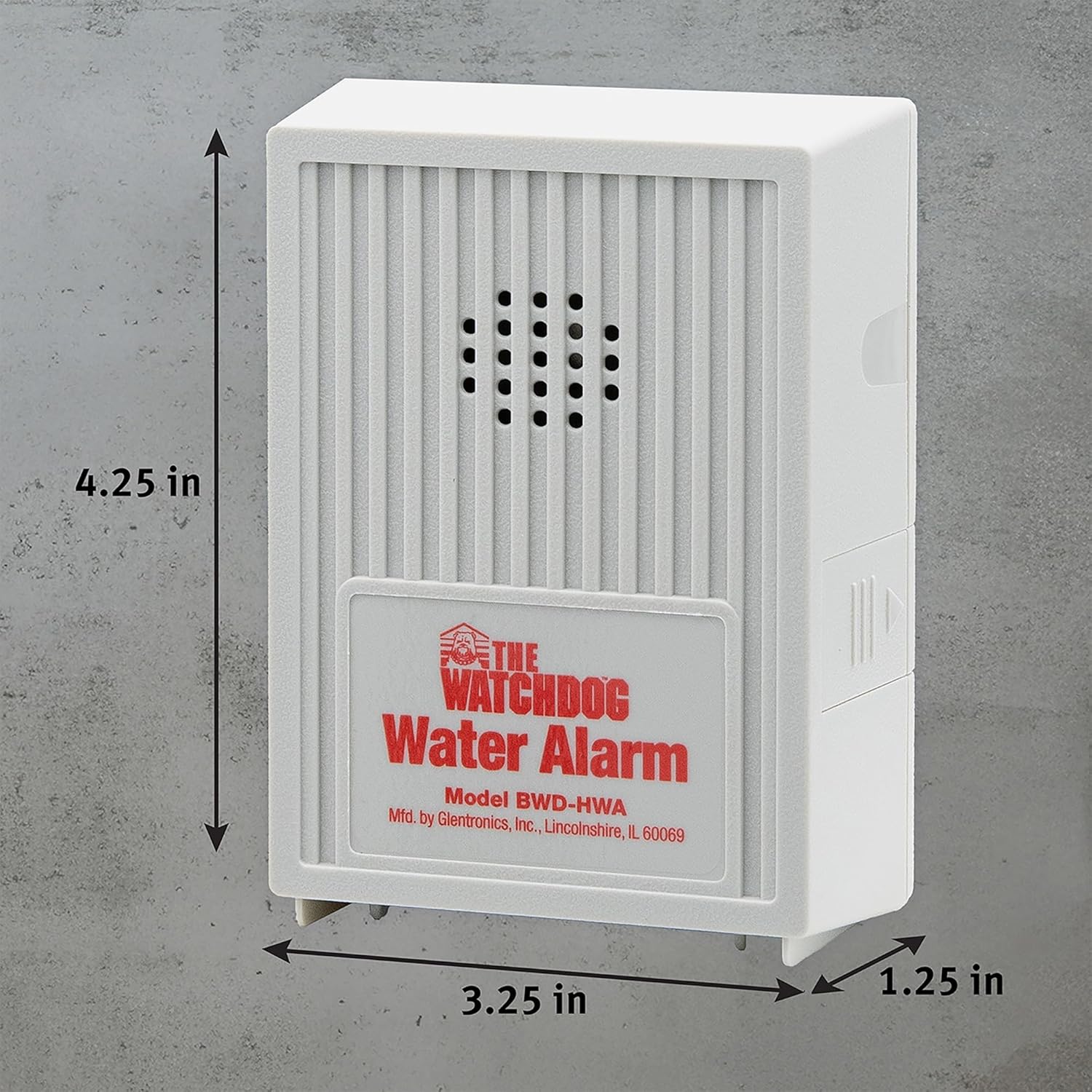
Figure 7: Product Dimensions
7. Warranty
This THE BASEMENT WATCHDOG Water Alarm (Model BWD-HWA) comes with a 5-year warranty from the manufacturer, Glentronics, Inc. Please retain your proof of purchase for warranty claims.
8. Support
For further assistance or inquiries regarding your THE BASEMENT WATCHDOG Water Alarm, please refer to the manufacturer's official website or contact their customer support. Specific contact details are typically provided in the product packaging or on the manufacturer's website.
