
1. Introduction
The Sigma SD14 is a 14-megapixel Digital Single-Lens Reflex (DSLR) camera designed for advanced photographers. It features the Foveon X3 direct-image sensor, which captures full RGB color information at each pixel layer, aiming for high-definition images with rich gradation. This manual provides essential information for setting up, operating, and maintaining your SD14 camera.
Key features include a 2.5-inch LCD monitor, a durable shutter mechanism rated for over 100,000 cycles, a 5-point autofocus system, and continuous shooting capabilities. The camera supports both RAW and JPEG image recording formats and includes Sigma Photo Pro 3.0 software for RAW image processing.

Figure 1.1: Front view of the Sigma SD14 Digital SLR Camera, showing the lens mount and body design.
2. What's in the Box
Verify that all the following items are included in your Sigma SD14 package:
- Sigma SD14 Digital SLR Camera Body
- Lithium-ion Power Battery BP-21
- Battery Charger BC-21
- USB Cable
- Video Cable
- Neck Strap
- Eye Cap
- Body Cap
- Eyepiece Cap
- SIGMA Photo Pro 3.0 CD-ROM
- SD14 Instruction Manual (this document)
3. Setup
3.1. Charging and Installing the Battery
- Insert the Lithium-ion Battery BP-21 into the Battery Charger BC-21.
- Connect the charger to a power outlet. The charging indicator will illuminate.
- Charging typically takes approximately 120 minutes for a full charge.
- Once fully charged, remove the battery from the charger.
- Open the battery compartment cover on the camera body.
- Insert the charged battery into the compartment, ensuring correct orientation.
- Close the battery compartment cover securely.
A fully charged BP-21 battery can capture approximately 500 images.
3.2. Inserting a Memory Card
The SD14 uses CompactFlash (CF) Type I/II cards. Ensure the card is formatted in the camera before first use.
- Open the CF card slot cover on the side of the camera.
- Insert the CF card with the correct orientation until it clicks into place.
- Close the CF card slot cover securely.
3.3. Attaching a Lens
The Sigma SD14 uses the Sigma SA Bayonet mount. Only Sigma SA mount lenses are directly compatible.
- Remove the body cap from the camera and the rear lens cap from the lens.
- Align the red index mark on the lens with the red index mark on the camera body's lens mount.
- Attach the lens by rotating it clockwise until it locks into place with a click.
- To remove the lens, press the lens release button on the camera body and rotate the lens counter-clockwise.
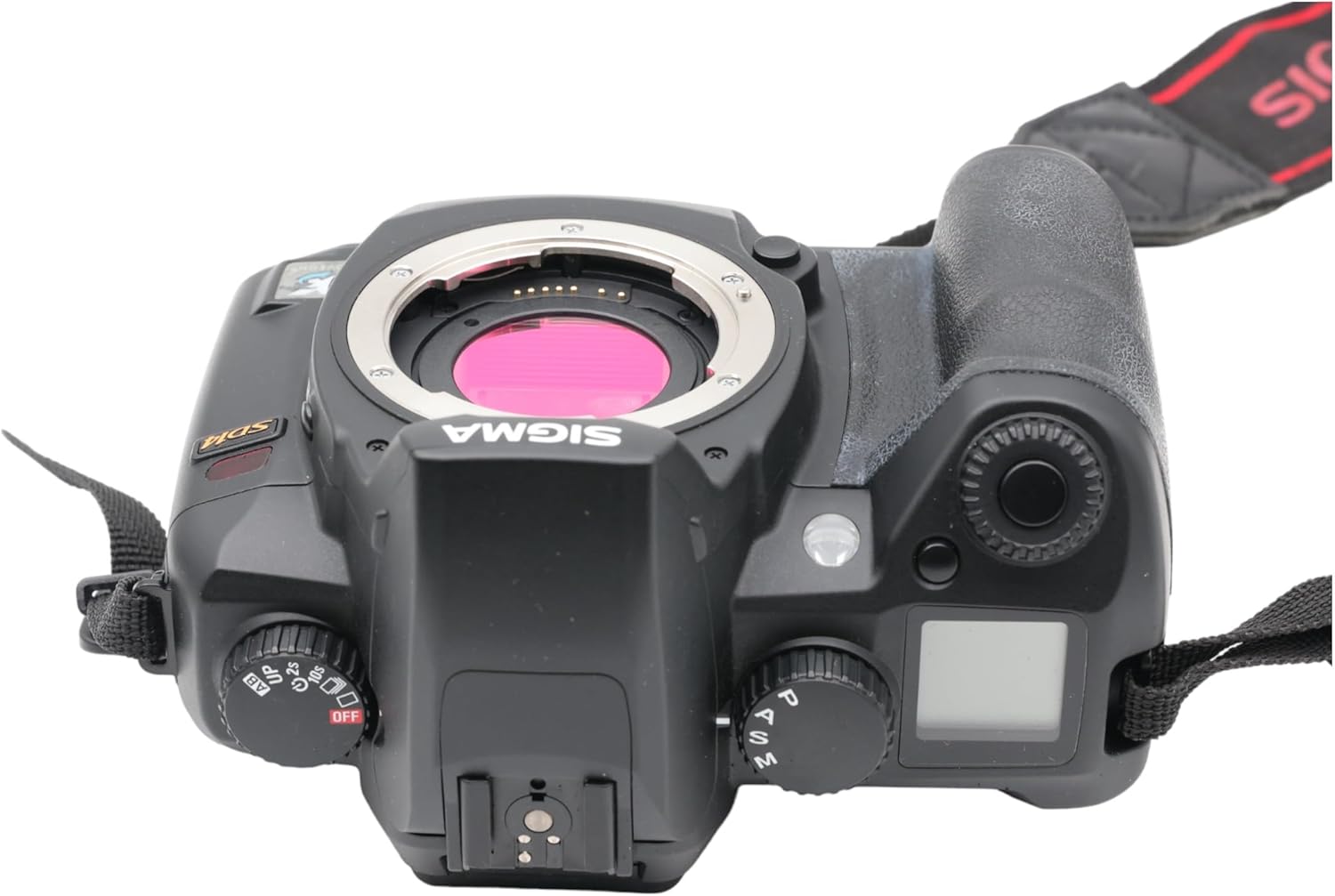
Figure 3.1: Top view of the Sigma SD14, illustrating the lens mount and mode dials.
4. Operation
4.1. Powering On/Off
Rotate the power switch to the ON position to turn on the camera. Rotate it to OFF to power down.
4.2. Basic Controls and Display
The SD14 features a 2.5-inch LCD monitor for reviewing images and navigating menus, and a pentaprism viewfinder for composing shots. The top LCD panel displays key settings such as resolution, metering mode, battery status, and remaining shots.

Figure 4.1: Rear view of the Sigma SD14, showing the LCD monitor, viewfinder, and control buttons.
Key buttons include MENU, ISO, WB (White Balance), and a 4-way controller with an OK button for navigation. The INFO button displays shutter speed, aperture, and other settings on the LCD.
4.3. Focusing
The camera utilizes a 5-point autofocus (AF) system (center, left, right, up, and down). The center AF point features a cross-type sensor for enhanced precision. AF point selection can be automatic or manual.
4.4. Metering Modes
The SD14 offers three metering modes:
- 8-segment Evaluative Metering: Analyzes the entire scene for balanced exposure.
- Center Area Metering: Prioritizes the central area of the frame.
- Center Weighted Average Metering: Measures the entire frame but gives more weight to the central area.
Exposure compensation and auto bracketing functions are available for fine-tuning exposure.
4.5. Image Recording
The camera supports both RAW (X3F) and JPEG formats. JPEG recording offers four sizes (Super High, High, Medium, Low) and three quality settings (Fine, Normal, Basic).
- Super High (4608 x 3072 pixels): Suitable for A3 or larger prints.
- High (2640 x 1760 pixels): Suitable for A4 prints.
- Medium (1776 x 1184 pixels): Suitable for regular size prints.
- Low (1296 x 864 pixels): Suitable for web pages and email.
4.6. Continuous Shooting
The SD14 can shoot continuously at 3 frames per second. The number of frames captured in a burst depends on the resolution setting:
- High: 6 frames
- Medium: 12 frames
- Low: 24 frames
These figures apply to both RAW and JPEG modes.
4.7. Built-in Flash
The built-in flash has a guide number of 11 (ISO 100) and covers a 17mm lens angle (28mm equivalent on 35mm format). It supports S-TTL automatic flash metering and can synchronize with shutter speeds up to 1/180 second.
4.8. Mirror Lock-up
Activate the mirror lock-up mechanism to prevent camera shake caused by mirror movement during exposure. This is particularly useful for macro photography, long telephoto shots, or scientific applications. For best results, use with a remote controller or cable release (sold separately).
4.9. Sigma Photo Pro 3.0 Software
The included Sigma Photo Pro 3.0 software is a RAW image developer. It allows for quick conversion of RAW data and offers three adjustment modes: X3F Mode (original settings), Auto Adjustment Mode, and Custom Mode for manual adjustments (exposure, contrast, shadow, highlight, saturation, sharpness, fill-light). The software supports 8-bit TIFF, 16-bit TIFF, and JPEG file formats, and sRGB, Apple RGB, Adobe RGB, and ColorMatch RGB color spaces.
5. Maintenance
5.1. Image Sensor Dust Protector
The SD14 features a dust protector positioned in front of the image sensor. This design prevents dust from adhering directly to the sensor, minimizing its impact on image quality. If dust accumulates on the protector, it will be out of focus and generally not visible in images.
5.2. Cleaning the Camera Body and Lens
- Use a soft, lint-free cloth to wipe the camera body. For stubborn dirt, slightly dampen the cloth with water or a mild cleaning solution.
- For lenses, use a lens brush to remove loose dust, then a lens cleaning solution and a microfiber cloth. Avoid touching the lens surface with your fingers.
- Never use organic solvents like paint thinner or benzene to clean the camera or lens.
5.3. Battery Care
- Store batteries in a cool, dry place when not in use.
- Avoid fully discharging the battery frequently to prolong its lifespan.
- If the camera will not be used for an extended period, remove the battery.
6. Troubleshooting
| Problem | Possible Cause | Solution |
|---|---|---|
| Camera does not power on. | Battery is depleted or incorrectly inserted. | Charge the battery fully and ensure it is inserted correctly. |
| Images are blurry. | Incorrect focus, camera shake, or dirty lens. | Ensure proper focus. Use a faster shutter speed or tripod. Clean the lens. |
| Images are too dark or too bright. | Incorrect exposure settings or metering mode. | Adjust exposure compensation. Select an appropriate metering mode for the scene. |
| Color blotching in underexposed areas. | Characteristic of the Foveon sensor when severely underexposed. | Aim to slightly overexpose images (e.g., +.7 EV) to retain shadow detail and avoid this effect. |
| Cannot record images. | Memory card is full, locked, or not inserted correctly. | Insert an empty card, unlock the card, or reinsert it correctly. Format the card if necessary (this will erase all data). |
| Camera freezes or becomes unresponsive. | Temporary software glitch. | Remove and reinsert the battery to reset the camera. |
For more detailed troubleshooting or error codes, please refer to the comprehensive instruction manual included with your camera or visit the Sigma support website.
7. Specifications
| Feature | Detail |
|---|---|
| Model Name | SD14 |
| Photo Sensor Resolution | 14 MP (Foveon X3 direct-image sensor) |
| Photo Sensor Size | APS-C |
| Compatible Mountings | Sigma SA Bayonet |
| Supported File Formats | JPEG, RAW (X3F), TIFF |
| Screen Size | 2.5 Inches (150,000 pixels) |
| Viewfinder | Optical Pentaprism (98% coverage, 0.9x magnification) |
| Autofocus Points | 5-point (Phase Detection) |
| Continuous Shooting Speed | 3 frames per second |
| Maximum Shutter Speed | 1/4000 Seconds |
| Minimum Shutter Speed | 30 seconds |
| Expanded ISO Range | 100 - 1600 |
| Metering Modes | 8-segment Evaluative, Center Area, Center Weighted Average |
| Built-in Flash Guide Number | 11 (ISO 100) |
| Storage Media | Compact Flash (CF) Type I/II |
| Power Source | Lithium-ion Battery BP-21 |
| Connectivity | USB, Video Out |
| Item Weight | 1.65 Pounds (approx. 748g) |
| Model Number | C23900 |
| UPC | 085126924416 |
7.1. Optional Accessories (Sold Separately)
- Sigma Lenses (over 40 compatible models)
- Flashguns: EF-500 DG SUPER, EF-500 DG ST, EM-140 DG
- Power Grip PG-21
- Cable Release CR-21
- Remote Controller RS-31
- AC Adapter SAC-21
8. Warranty & Support
8.1. Warranty Information
For detailed warranty terms and conditions, please refer to the warranty card included with your product or visit the official Sigma website. Warranty coverage typically includes defects in materials and workmanship for a specified period from the date of purchase.
8.2. Customer Support
If you encounter any issues or have questions not covered in this manual, please contact Sigma customer support. Contact information can usually be found on the official Sigma website or in the warranty documentation.
Online Resources: Visit the official Sigma website for product registration, firmware updates, FAQs, and additional support resources.