
Introduction
Thank you for choosing the Bahco 268 Mini Hacksaw. This manual provides essential information for the safe operation, proper setup, and maintenance of your new tool. Please read these instructions carefully before use and retain them for future reference.
Safety Instructions
- Always wear appropriate personal protective equipment, including safety glasses, when operating the hacksaw.
- Ensure the workpiece is securely clamped before cutting to prevent movement and potential injury.
- Keep hands and fingers away from the blade during operation.
- Do not apply excessive force; let the blade do the work. Excessive force can cause the blade to break.
- Inspect the blade for damage or dullness before each use. Replace damaged or dull blades immediately.
- Store the hacksaw in a dry, safe place, out of reach of children.
- Do not use the hacksaw for purposes other than its intended use (cutting metal or plastic).
Product Overview
The Bahco 268 Mini Hacksaw is a compact and efficient cutting tool designed for various materials. It features a durable frame and an ergonomic handle for comfortable use.
- Blade Length: 150mm (6 inches)
- Frame Material: Hardened zinc-plated flat steel
- Handle: Ergonomic plastic pistol grip style
- Included Blade: 32 tpi (teeth per inch) alloy blade
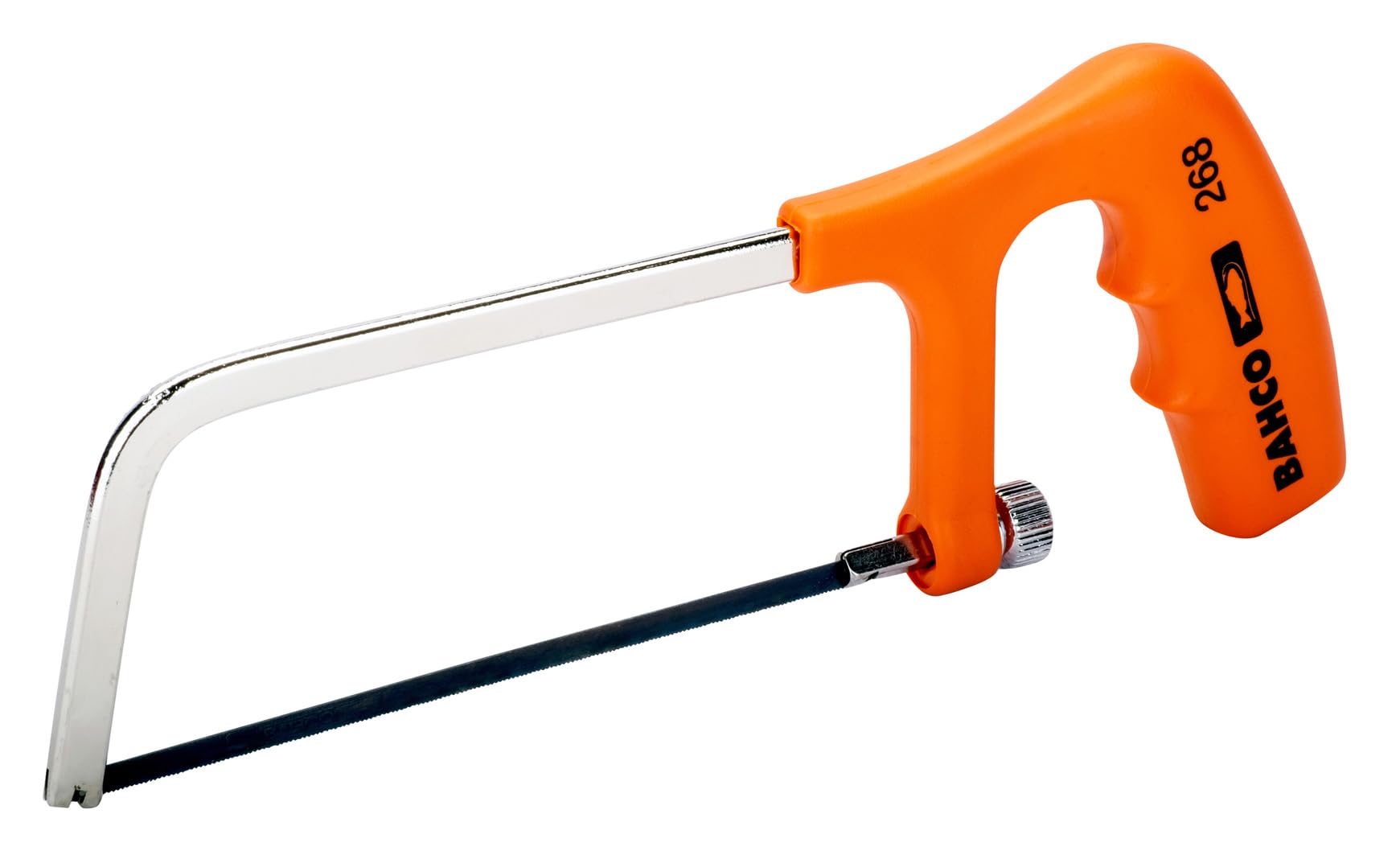
Figure 1: Bahco 268 Mini Hacksaw. This image shows the complete hacksaw, highlighting its orange ergonomic handle, silver frame, and the installed blade.
Setup: Blade Installation and Tensioning
Proper blade installation and tensioning are crucial for effective and safe cutting.
- Loosen the Tension Nut: Locate the tensioning nut integrated into the handle. Turn it counter-clockwise to loosen the blade holder mechanism.
- Insert the Blade: Position the blade with the teeth pointing forward (away from the handle) and downwards. Insert one end of the blade into the pin on the front of the frame and the other end into the pin near the tensioning nut.
- Tension the Blade: Turn the tensioning nut clockwise to tighten the blade. The blade should be taut and straight, producing a clear ringing sound when plucked. Do not overtighten, as this can damage the blade or frame.
- Check Alignment: Ensure the blade is properly aligned and securely held by both pins.
Operating Instructions
Follow these steps for safe and efficient cutting:
- Secure Workpiece: Always secure the material you intend to cut in a vise or with clamps to prevent it from moving during the cutting process.
- Starting the Cut: Place the blade on the marked cutting line. Apply light pressure on the forward stroke to start the cut.
- Cutting Motion: Use long, steady strokes. Apply pressure only on the forward stroke and relieve pressure on the return stroke. This helps to prolong blade life and prevents the blade from binding.
- Maintain Angle: Keep the hacksaw at a consistent angle to the workpiece throughout the cut.
- Cooling: For harder materials, a cutting fluid can be used to cool the blade and improve cutting efficiency.
- Finishing the Cut: As you approach the end of the cut, reduce pressure to avoid breaking the material or the blade.
Maintenance
Regular maintenance ensures the longevity and optimal performance of your hacksaw.
- Cleaning: After each use, clean the blade and frame to remove any metal shavings or debris. A stiff brush can be used for the blade.
- Lubrication: Apply a light coat of oil to the blade and frame components to prevent rust, especially if storing for extended periods.
- Blade Replacement: Replace blades when they become dull or damaged. A dull blade requires more effort and can lead to inefficient cutting and potential injury.
- Storage: Store the hacksaw in a dry environment to prevent corrosion.
Troubleshooting
| Problem | Possible Cause | Solution |
|---|---|---|
| Blade binds or sticks during cutting. | Incorrect cutting angle; excessive pressure; dull blade; workpiece not secure. | Adjust cutting angle; reduce pressure; replace blade; secure workpiece firmly. |
| Blade breaks frequently. | Overtightened blade; excessive side pressure; incorrect blade for material; dull blade. | Ensure proper blade tension; maintain straight cutting motion; use appropriate blade; replace dull blade. |
| Ineffective cutting or slow progress. | Dull blade; insufficient pressure; incorrect blade for material. | Replace blade; apply appropriate pressure on forward stroke; ensure blade is suitable for the material. |
Specifications
| Feature | Detail |
|---|---|
| Brand | Bahco |
| Model Number | 268 (BAH268) |
| Product Dimensions | 13 x 5 x 30 cm |
| Item Weight | 172.37 g (0.38 pounds) |
| Blade Length | 150 mm (6 inches) |
| Blade Material | Alloy Steel |
| Frame Material | Hardened Zinc-Plated Flat Steel |
| Handle Type | Ergonomic Pistol Grip (Plastic) |
| Recommended Use | Plastic, Metal Cutting |
| Included Components | 150mm (6 inch) Mini Hacksaw with 32 tpi blade |
Warranty and Support
For warranty information or technical support, please refer to the official Bahco website or contact your local Bahco distributor. Keep your purchase receipt as proof of purchase.
Official Bahco Website: www.bahco.com
