
1. Introduction
The Lisle 68100 Deluxe Feeler Gauge is a precision instrument designed for accurately measuring small gaps or clearances. This tool is essential for various mechanical and automotive applications where precise gap measurement is critical for proper function and adjustment. It features 31 individual blades, each marked with its thickness, allowing for a wide range of measurements.
2. Product Overview
The Lisle 68100 Deluxe Feeler Gauge consists of a set of 31 hardened steel blades, securely fastened within a protective holder. Each blade is precisely manufactured to a specific thickness and is clearly marked with its measurement in both inches and millimeters. The design allows individual blades to be fanned out for selection while keeping unused blades safely stored.
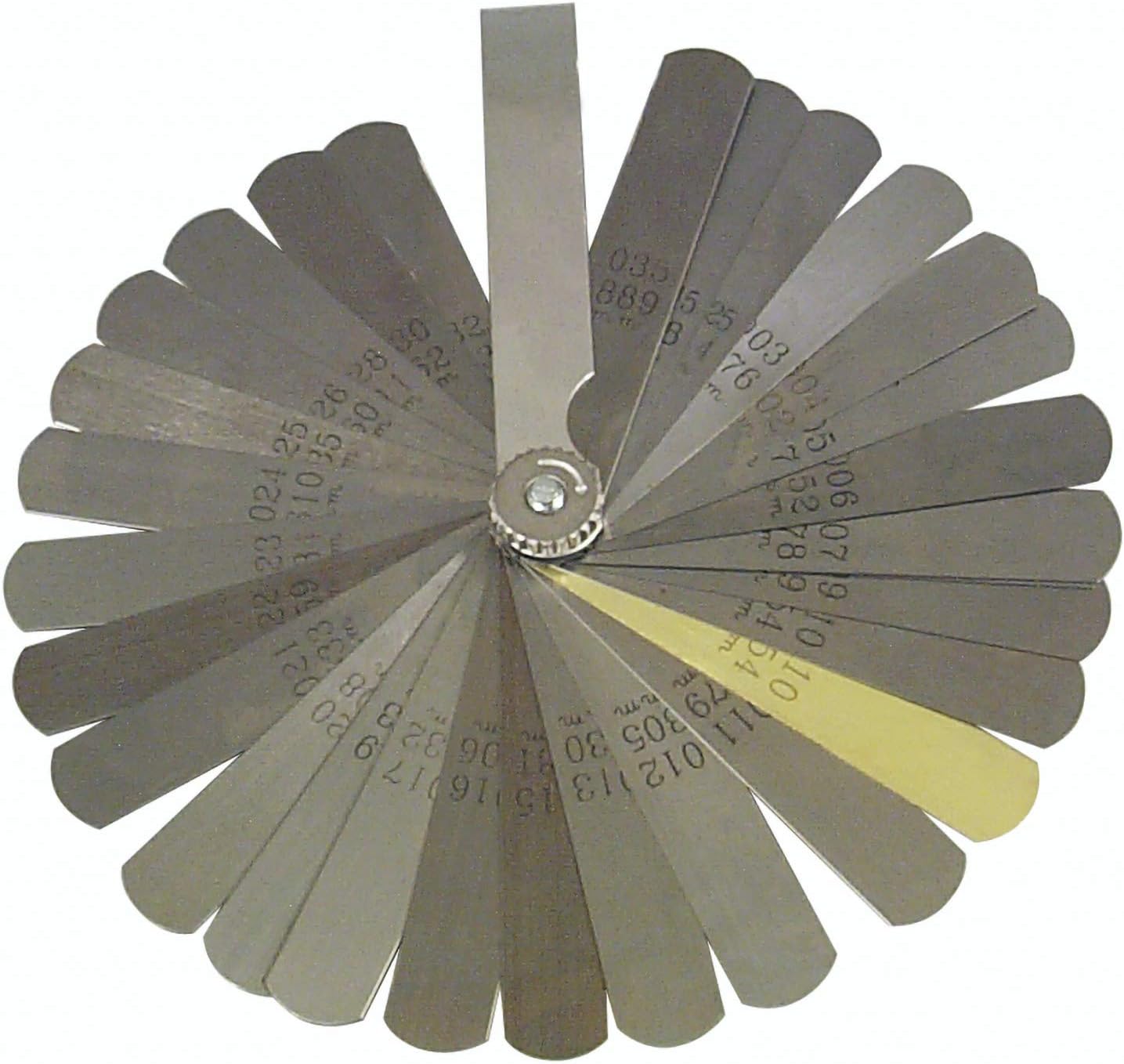
Figure 1: The Lisle 68100 Deluxe Feeler Gauge, displaying its array of 31 precision blades. Each blade is individually marked for thickness.
Key Features:
- 31 Precision Blades: Offers a comprehensive range of measurements for diverse applications.
- Dual Measurement Markings: Each blade is marked in both inches and millimeters for convenience.
- Durable Construction: Hardened steel blades ensure accuracy and longevity.
- Compact Design: Easily stored and transported.
3. Setup
- Inspect the Gauge: Before each use, visually inspect the feeler gauge blades for any signs of damage, bending, or corrosion. Ensure all blades are clean and free from debris or oil, which could affect measurement accuracy.
- Identify Required Thickness: Determine the specific gap or clearance measurement required for your application.
- Select Blade(s): Fan out the blades and select the single blade or combination of blades that matches the desired thickness.
4. Operating Instructions
Using the feeler gauge correctly is crucial for obtaining accurate measurements. Follow these steps:
- Clean the Area: Ensure the surfaces of the gap to be measured are clean and free from dirt, oil, or burrs. Any foreign material can lead to inaccurate readings.
- Insert the Blade: Gently insert the selected feeler gauge blade into the gap. The blade should slide in with a slight, consistent drag.
- Assess the Fit:
- If the blade slides in too easily with no drag, the gap is larger than the blade's thickness. Try a thicker blade or combination.
- If the blade cannot be inserted without forcing it, the gap is smaller than the blade's thickness. Try a thinner blade or combination.
- The correct measurement is achieved when the blade can be inserted and withdrawn with a noticeable, uniform drag, but without excessive force or binding.
- Avoid Forcing: Never force a blade into a gap, as this can bend or damage the blade, leading to inaccurate future measurements.
- Multiple Blades (for specific applications): In some cases, multiple blades can be stacked to achieve a specific combined thickness. Ensure they are held together firmly and inserted as a single unit.

Figure 2: An illustration demonstrating the proper technique for inserting a feeler gauge blade into a mechanical gap to measure clearance.
5. Maintenance
- Cleaning: After each use, wipe down the blades with a clean, dry cloth to remove any oil, grease, or debris. For stubborn residue, a mild solvent can be used, followed by thorough drying.
- Lubrication: Apply a very light coat of rust-preventative oil to the blades, especially if storing for extended periods or in humid environments. This helps prevent corrosion.
- Storage: Store the feeler gauge in a clean, dry place. Keep all blades folded back into the holder to protect them from bending or damage.
- Inspection: Periodically check the pivot screw for tightness. If it becomes loose, gently tighten it to ensure blades fan out smoothly but remain secure.
6. Troubleshooting
Feeler gauges are simple tools, and most issues arise from improper handling or maintenance.
- Inaccurate Readings:
- Ensure blades are clean and free of debris.
- Verify the correct blade thickness is being used.
- Check for bent or damaged blades; replace if necessary.
- Ensure the gap surfaces are clean and parallel.
- Blades Sticking/Difficult to Fan Out:
- Clean blades thoroughly to remove any sticky residue.
- Apply a very small amount of light oil to the pivot point.
- Check if the pivot screw is overtightened; loosen slightly if needed.
- Corrosion on Blades:
- Clean off rust with a fine abrasive pad or rust remover, being careful not to alter blade thickness.
- Apply rust-preventative oil after cleaning.
- Store in a dry environment.
7. Specifications
| Feature | Detail |
|---|---|
| Model Number | 68100 |
| Number of Blades | 31 |
| Blade Material | Hardened Steel |
| Exterior Material | Brass (holder) |
| Item Weight | 4 ounces (approx. 113 grams) |
| Product Dimensions | 7.25 x 3 x 0.75 inches (approx. 18.4 x 7.6 x 1.9 cm) |
| Country of Origin | United States |
Note: Blade thickness ranges are not explicitly provided in the input, but are inherent to a 31-blade feeler gauge. Users should refer to the markings on individual blades for specific values.
8. Warranty Information
Lisle Corporation products are manufactured to high standards. For specific warranty details regarding your Lisle 68100 Deluxe Feeler Gauge, please refer to the warranty documentation included with your purchase or visit the official Lisle website. General warranty terms typically cover defects in materials and workmanship under normal use.
9. Customer Support
Should you have any questions, require technical assistance, or need to report an issue with your Lisle 68100 Deluxe Feeler Gauge, please contact Lisle customer support. Contact information can typically be found on the product packaging or the official Lisle website (www.lislecorp.com).