
1. Introduction
This manual provides essential instructions for the safe and effective use, setup, and maintenance of your Werner D6024-2 Fiberglass Extension Ladder. This heavy-duty ladder is designed for various tasks, offering a 250-pound duty rating (Type I) and non-conductive fiberglass construction for electrical safety. Please read this manual thoroughly before using the ladder to ensure proper operation and to prevent accidents.
2. Safety Information
Always prioritize safety when using any ladder. Failure to follow these guidelines can result in serious injury or death.
- Inspect Before Each Use: Before climbing, check the ladder for damage, loose rungs, or missing parts. Do not use a damaged ladder.
- Proper Setup: Ensure the ladder is placed on a firm, level surface. The base should be set at a 75-degree angle (approximately one foot out for every four feet of working height).
- Secure the Ladder: Always secure the top and bottom of the ladder to prevent slipping, especially when working at heights.
- Maintain Three Points of Contact: When climbing or descending, always keep three points of contact (two hands and one foot, or two feet and one hand) with the ladder.
- Do Not Overreach: Keep your body centered between the side rails. Do not lean too far to either side.
- Weight Capacity: Do not exceed the ladder's maximum load capacity of 250 pounds (Type I duty rating), which includes the user and any tools or materials.
- Electrical Safety: This fiberglass ladder is non-conductive, offering protection against electrical hazards. However, always exercise extreme caution and avoid contact with live electrical wires.
- Weather Conditions: Avoid using the ladder in strong winds, rain, or icy conditions.
- Clear Work Area: Ensure the area around the base and top of the ladder is clear of obstructions.
3. Components and Features
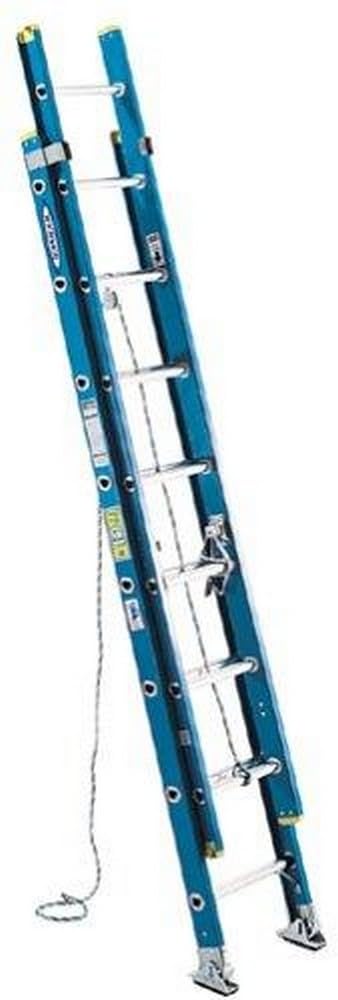
The Werner D6024-2 ladder incorporates several design elements for safety and performance:
- Fiberglass Rails: Provides non-conductive properties for electrical safety and durability.
- Alflo Rung Joint: Patented design for Twist-Proof performance, enhancing stability.
- Traction-Tred D-Rungs: Slip-resistant D-shaped rungs for secure footing.
- Interlocking Side Rails: Guides at the top and bottom securely interlock rails for safe extension and retraction.
- Rope Clamp and Pulley System: Facilitates smooth and controlled extension and retraction of the fly section.
- Direct Rung to Rail Connections: Ensures robust structural integrity.
4. Setup and Assembly
- Choose a Stable Location: Select a firm, level, and non-slippery surface for the ladder base. Avoid soft ground, uneven terrain, or areas with debris.
- Positioning the Base: Place the ladder base approximately one-quarter of the ladder's working length away from the wall or support structure. For example, if the working length is 20 feet, the base should be 5 feet from the wall. This creates a safe 75-degree angle.
- Extending the Ladder:
- Ensure the ladder is in a stable, upright position.
- Grasp the rope and pull downwards to extend the fly section (upper section) to the desired height.
- Ensure the rung locks engage securely over the rungs of the base section. Visually confirm both locks are fully engaged.
- Retracting the Ladder:
- While holding the rope, disengage the rung locks.
- Slowly and carefully lower the fly section until it rests fully on the base section.
- Top Support: Ensure the top of the ladder rests securely against a solid surface. Avoid resting it against unstable objects or windows.
5. Operating Instructions
- Climbing and Descending:
- Always face the ladder when climbing or descending.
- Use both hands to grasp the side rails or rungs.
- Maintain three points of contact at all times.
- Step firmly on the center of each rung.
- Working from the Ladder:
- Keep your belt buckle (center of gravity) between the side rails.
- Do not overreach. If an object is out of reach, descend and reposition the ladder.
- Never stand on the top three rungs of an extension ladder.
- Carrying Tools: Use a tool belt or hoist tools up after you have safely ascended the ladder. Avoid carrying tools in your hands while climbing.
- One Person Per Ladder: This ladder is designed for single-person use. Do not allow more than one person on the ladder at a time.
6. Maintenance
Regular maintenance ensures the longevity and safe operation of your ladder.
- Cleaning: Clean the ladder regularly with mild soap and water. Remove any dirt, grease, or paint that could obscure labels or create slippery surfaces. Rinse thoroughly and allow to dry completely.
- Inspection: Periodically inspect all components:
- Check rungs for damage, looseness, or excessive wear.
- Examine side rails for cracks, dents, or splinters.
- Verify that rung locks, rope, and pulley system operate smoothly and are not worn or damaged.
- Ensure ladder feet are intact and provide good traction.
- Storage: Store the ladder in a dry, secure location, away from extreme temperatures and direct sunlight. Support the ladder horizontally to prevent warping.
- Repairs: Do not attempt to repair damaged ladder components yourself. Contact Werner customer support or a qualified repair service for assistance.
7. Specifications
| Feature | Detail |
|---|---|
| Model Number | D6024-2 |
| Brand | Werner |
| Material | Fiberglass |
| Size (Extended Length) | 24 feet (288 inches) |
| Duty Rating | Type I (250 pounds) |
| Item Weight | 47 pounds |
| Special Features | Heavy Duty, Non-Conductive |
| UPC | 051751028577 |
8. Warranty and Support
The Werner D6024-2 Fiberglass Extension Ladder comes with a manufacturer's warranty. For specific details regarding warranty coverage, terms, and conditions, please refer to the warranty documentation included with your purchase or visit the official Werner website.
For technical support, replacement parts, or any questions not covered in this manual, please contact Werner customer service directly. Contact information can typically be found on the product packaging or the manufacturer's website.


