
1. Introduction to the Study Material
This manual provides guidance on effectively using the PW EaJEE Handwritten Notes For Inorganic Chemistry By Om Pandey. This resource is designed to support students preparing for JEE Main & Advanced examinations by offering clear, conceptual understanding and practice questions.
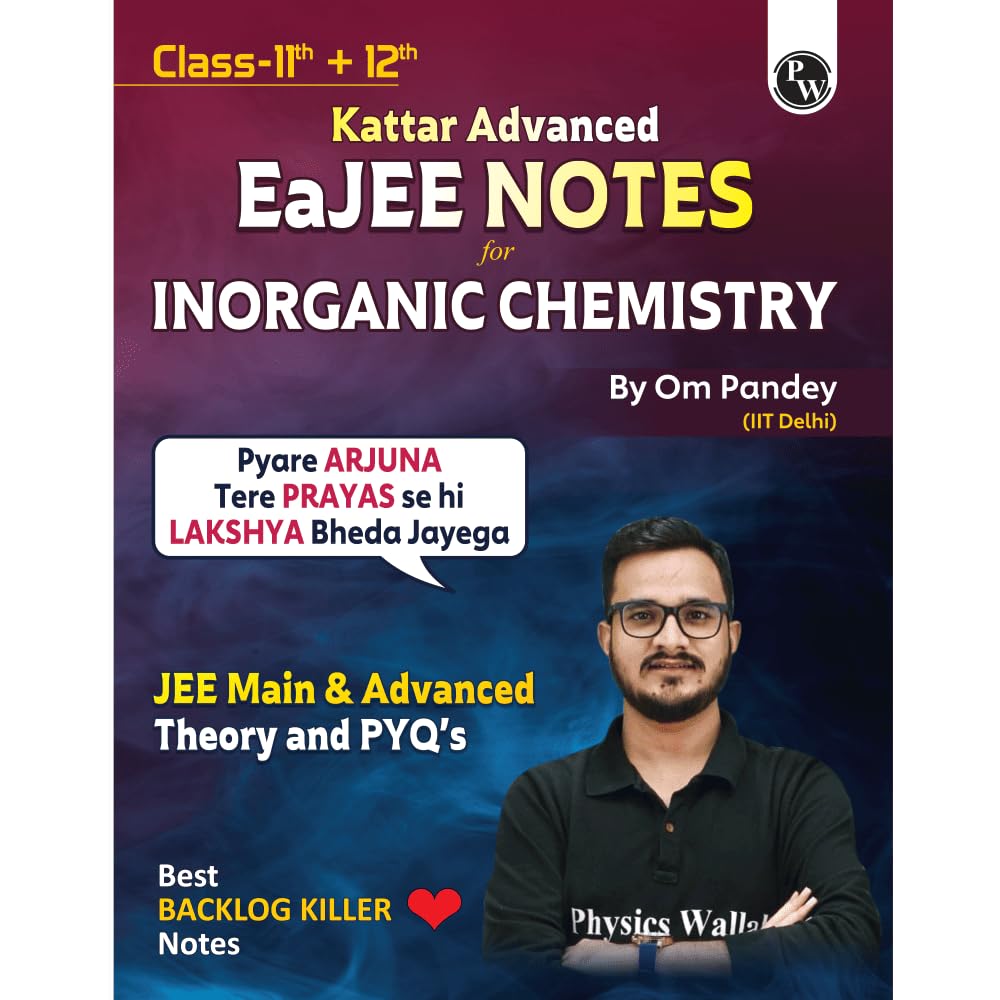
Figure 1.1: Front cover of the PW EaJEE Handwritten Notes for Inorganic Chemistry by Om Pandey. The cover features the title, author's name, and a photograph of Om Pandey.
2. How to Effectively Use This Book
This section outlines strategies for maximizing your learning and preparation using these notes.
2.1. Understanding the Book's Features
The book is structured to provide a comprehensive and integrated learning experience. Each topic includes detailed theory, followed by relevant Previous Year Questions (PYQs).
- Complete Theory + PYQs: Covers the entire syllabus for JEE Main & Advanced with Previous Year Questions integrated topic-wise for complete practice.
- Jwala Concept by Om Sir: Learn through the unique Jwala Concept – a simplified and powerful learning method developed by Om Pandey to help students grasp tricky topics quickly.
- Multicoloured Handwritten Notes: Visual learning made easier with colour-coded notes that enhance retention and break monotony.
- Real Classroom Vibes: Experience personalized learning with notes that replicate Om Sir’s engaging classroom style.
- Easy Learning of Inorganic Chemistry: Every topic is broken into digestible chunks for easier understanding and long-term retention.
- Creative Core Concept Presentation: Visual representations, charts, and creative formatting for quick grasping of key principles.
- NCERT Decoded in Simple Language: Complex NCERT content is simplified for better clarity and confidence in fundamentals.
- PYQs Integrated with Topics: Practice exam-level questions exactly where they’re needed—right after the concept is taught.

Figure 2.1: Overview of the book's key features, highlighting its comprehensive approach to Inorganic Chemistry for JEE.
2.2. Recommended Study Approach
- Read Theory First: Begin by thoroughly reading the theoretical concepts presented in each section. Pay attention to the multicoloured notes and creative presentations.
- Understand Jwala Concept: For topics where the Jwala Concept is applied, ensure you grasp the simplified approach before moving on.
- Practice Integrated PYQs: Immediately after studying a concept, attempt the integrated Previous Year Questions. This helps in understanding the application of the concept and identifying areas for further review.
- Review NCERT Decoded Sections: Utilize the simplified NCERT content to reinforce fundamental understanding.
- Regular Revision: Due to the nature of Inorganic Chemistry, regular revision of concepts, reactions, and exceptions is crucial.
3. Content Overview
The book covers a wide range of topics essential for JEE Inorganic Chemistry. Below is a general outline of the content:
- Classification of Elements and Periodicity in Properties
- Chemical Bonding and Molecular Structure
- Coordination Compounds
- The p-Block Elements (Group 13 and 14)
- The p-Block Elements (Group 15 to 18)
- The d- and f-Block Elements
- Salt Analysis
- Hydrogen
- The s-Block Elements
- General Principles and Processes of Isolation of Elements
Figure 3.1: An example of the book's content page, listing major topics covered.
4. Detailed Features and Examples
4.1. Complete Theory and PYQs
Each concept is followed by relevant questions from past JEE exams, allowing for immediate application of learned theory.

Figure 4.1: A sample page illustrating the integration of theoretical explanations, such as 'Ionic Character in Covalent Bond', with solved and unsolved Previous Year Questions (PYQs) from JEE exams.
4.2. Om Sir's Special - Jwala Concept
The Jwala Concept simplifies complex topics, making them easier to understand and remember. This approach is particularly beneficial for challenging areas of Inorganic Chemistry.
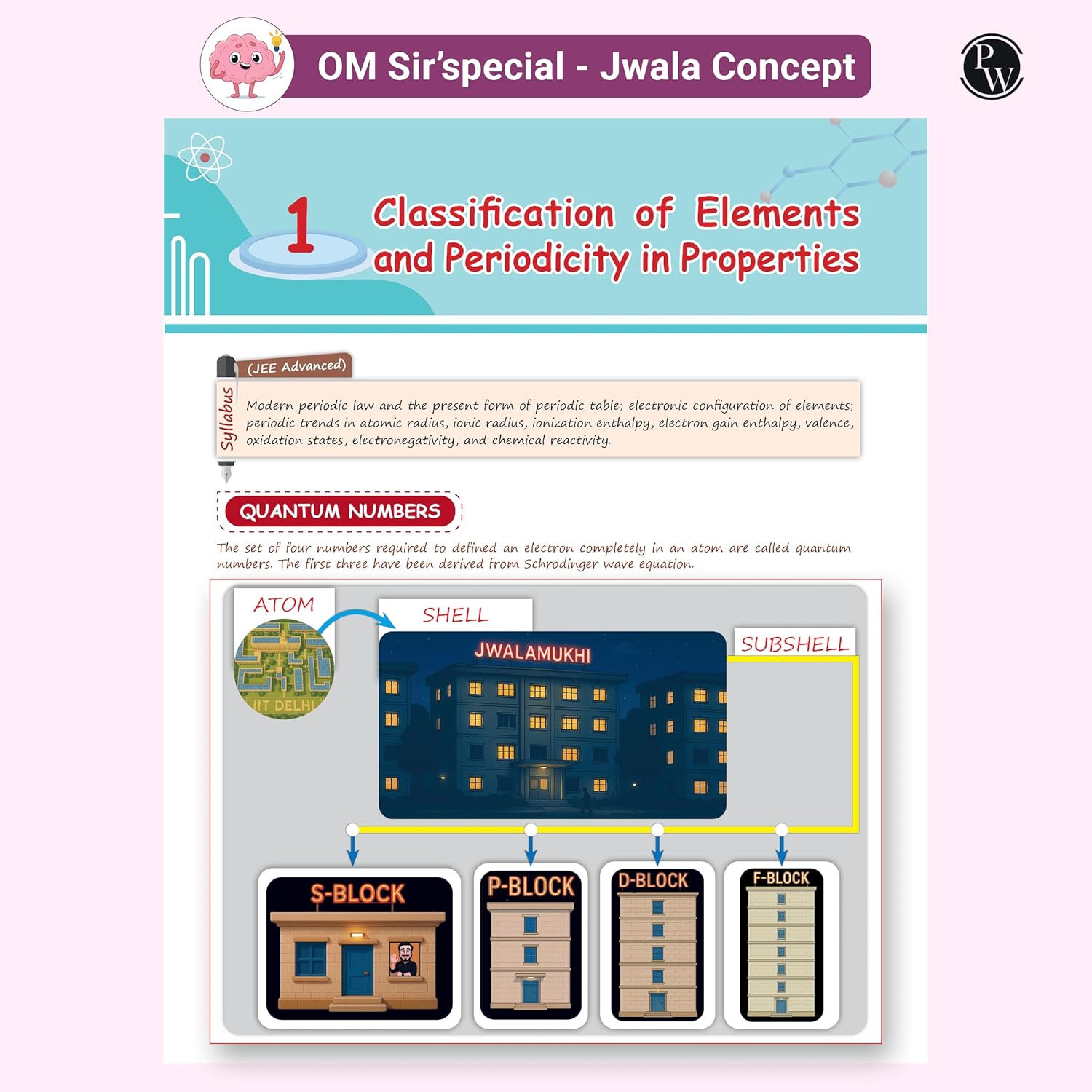
Figure 4.2: An example of the 'Jwala Concept' applied to 'Classification of Elements and Periodicity in Properties', featuring a visual representation of quantum numbers and block elements.
4.3. Real Classroom Vibes Experience
The notes are designed to mimic the interactive and engaging environment of a live classroom, making self-study more effective.

Figure 4.3: A page demonstrating the 'Real Classroom Vibes Experience' with a detailed table on IUPAC naming, common names, and positions of elements, presented clearly for easy understanding.
4.4. Easy Learning of Inorganic Chemistry
Complex topics are simplified using mnemonic devices and visual aids to facilitate easier memorization and understanding.

Figure 4.4: An example page illustrating 'Easy Learning of Inorganic Chemistry' through mnemonic devices and visual cues for remembering different groups of elements (e.g., Alkali Metals, Halogen Family).
4.5. Creative Core Concept Presentation
Visual representations and flowcharts are used to explain chemical reactions and concepts, making them intuitive.
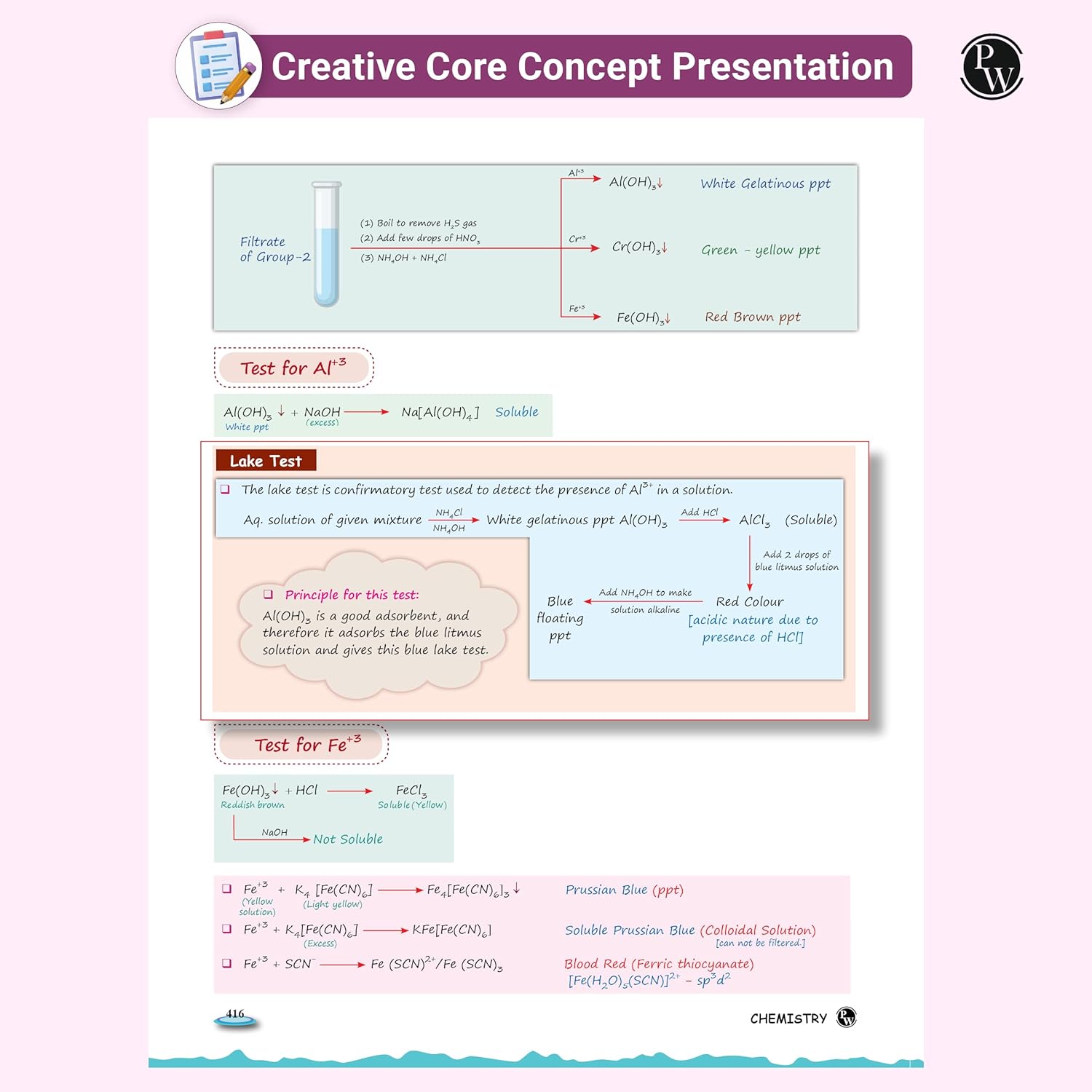
Figure 4.5: A sample page showcasing 'Creative Core Concept Presentation' with flowcharts and diagrams explaining chemical tests, such as the Lake Test for Aluminium and tests for Iron.
4.6. Multicoloured Handwritten Notes
The use of multiple colors in handwritten notes helps in distinguishing different elements of information, improving readability and recall.

Figure 4.6: An example page featuring 'Multicoloured Handwritten Notes' detailing IUPAC names and formulas of complex coordination compounds, using color to highlight different parts of the information.
5. About the Author
Om Pandey, a Master of Science from IIT Delhi, is a renowned name in the field of Chemistry. With over 10 years of teaching experience, he has guided thousands of students to success in competitive exams like JEE. His unique teaching style, including the 'Jwala Concept', focuses on simplifying complex topics and making them accessible to students.

Figure 5.1: Back cover of the book, providing a brief biography of the author, Om Pandey, and highlighting the book's features.
6. Product Specifications
| Specification | Detail |
|---|---|
| Publisher | Physics Wallah |
| Publication Date | 5 July 2025 |
| Language | English |
| Print Length | 499 pages |
| ISBN-10 | 9371535369 |
| ISBN-13 | 978-9371535366 |
| Reading Age | 15 years and up |
| Item Weight | 990 g |
| Dimensions | 28 x 22 x 2 cm |
| Country of Origin | India |
7. Publisher Information and Support
This book is published by Physics Wallah, a leading educational platform dedicated to supporting students in their academic journey.
7.1. About Physics Wallah
Physics Wallah (PW) has been supporting students since 2020, helping them develop skills and become self-reliant. They offer a wide range of educational resources and services.

Figure 7.1: Alakh Pandey (Founder & CEO) and Prateek Maheshwari (Co-Founder) of Physics Wallah.
7.2. Additional Resources and Feedback
For more books and educational resources from Physics Wallah, or to provide feedback on this product, please visit their official channels:
- Physics Wallah Store: Visit the PW Store
- ISBN-13: 978-9371535366

Figure 7.2: A selection of bestseller publications from Physics Wallah, showcasing their range of educational materials.