Saab 9-3 Service and Repair Manual (2002-2007)
Models covered: Saab 9-3 (September 2002 to September 2007)
Introduction
This manual provides comprehensive step-by-step instructions for the maintenance and repair of Saab 9-3 models manufactured between September 2002 and September 2007. It is designed to assist owners and technicians in performing various tasks, from routine servicing to more complex repairs.
Important Note:
- This repair manual does not cover car models with the 1.8 liter or 2.8 liter petrol engine.
- It also does not cover models with the 2.2 liter diesel engine.
- Specifics for SAAB 9-3 models introduced in September 2007 are not covered.

Figure 1: Front cover of the Saab 9-3 Service and Repair Manual. The cover displays a silver Saab 9-3 sedan with the hood open, showing the engine bay, and the Haynes logo.
How to Use This Manual
This manual is structured to guide you through various repair and maintenance procedures. Each section is based on practical experience, derived from complete strip-downs and rebuilds of several Saab 9-3s. The content aims to provide clear, step-by-step instructions with supporting visuals.
- Step-by-step instructions: Detailed guidance for each task.
- Over 900 photographs: Visual aids to clarify procedures.
- DIY-friendly techniques: Instructions designed for vehicle owners with varying levels of experience.
- Fault Finder: A dedicated section to help diagnose common issues.

Figure 2: An internal page illustrating the "SEE HAYNES, SEE HOW" approach. It shows mechanics performing work on a car engine, emphasizing practical, hands-on guidance.

Figure 3: An informational page detailing the benefits of using a Haynes manual, including DIY-friendly techniques, over 700 pictures and diagrams, and a Fault Finder section.
Manual Contents Overview
The manual is organized into logical sections to facilitate easy navigation and reference. Key sections include:
- Living with your Saab 9-3 (Safety, Introduction)
- Roadside Repairs (Jump starting, Wheel changing, Identifying tasks, Towing)
- Weekly Checks (Underbonnet, Engine oil, Coolant, Brake fluid, Washer fluid, Tyre condition, Battery, Wiper blades)
- Lubricants and fluids
- Tyre pressures
- Maintenance (Routine maintenance and servicing, Maintenance schedule, Procedures)
- Engine and Associated Systems (Petrol engine, Diesel SOHC, Diesel DOHC, Engine removal, Cooling, Heating, Air conditioning, Fuel and exhaust systems, Emission control, Ignition, Starting and charging)
- Transmission (Clutch, Manual transmission, Automatic transmission, Driveshafts)
- Brakes and Suspension (Braking system, Suspension and steering system)
- Body equipment (Bodywork and fittings, Body electrical system, Wiring diagrams)
- Reference (Conversion factors, Buying spare parts, Vehicle identification, General repair procedures, Jacking and vehicle support, Tools and working facilities, MOT test checks, Fault finding, Glossary of technical terms)
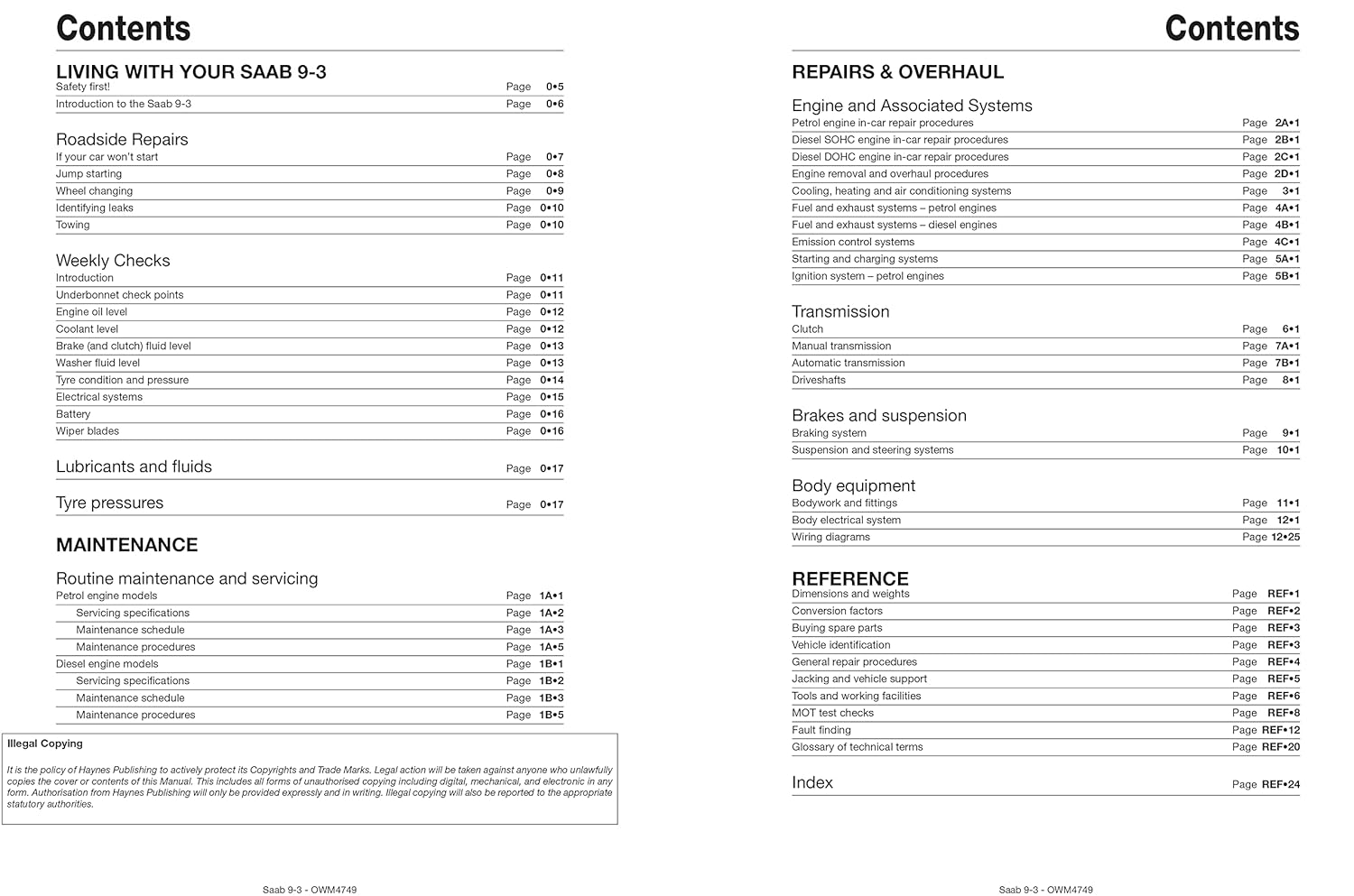
Figure 4: The first page of the manual's contents, detailing sections like 'Living with your Saab 9-3', 'Roadside Repairs', 'Weekly Checks', 'Lubricants and fluids', 'Tyre pressures', and 'Maintenance'.

Figure 5: The second page of the manual's contents, covering 'Engine and Associated Systems', 'Transmission', 'Brakes and suspension', 'Body equipment', and 'Reference' sections.
Maintenance
Regular maintenance is crucial for the longevity and performance of your Saab 9-3. This manual details various maintenance procedures, including weekly checks, servicing specifications, and lubrication requirements.
Servicing Specifications - Petrol Models

Figure 6: A page from the manual outlining servicing specifications for petrol models. It includes details on lubricants, fluid capacities (engine oil, cooling system, transmission, fuel tank), ignition system components, brake specifications, remote control battery type, tyre pressures, and torque wrench settings.
Capacities (Approximate)
- Engine oil: 6.0 liters (drain and refill with filter change)
- Cooling system: 7.1 liters
- Transmission (Manual): 1.8 liters (5-speed), 3.0 liters (6-speed)
- Transmission (Automatic): 7.0 liters (total fill dry)
- Fuel tank: 58.0 liters (all models)
Torque Wrench Settings (Nm / lbf ft)
- Automatic transmission drain plug: 40 Nm / 30 lbf ft
- 5-speed manual transmission drain plug: 45 Nm / 33 lbf ft
- Automatic transmission filler plug (6-speed only): 30 Nm / 22 lbf ft
- Engine oil sump drain plug: 50 Nm / 37 lbf ft
- Front engine reinforcement bolts (Convertible only): 20 Nm / 15 lbf ft
- Ignition coil screws: 20 Nm / 15 lbf ft
- Manual transmission level/fill plug: 50 Nm / 37 lbf ft
- Spark plugs: 30 Nm / 22 lbf ft
- Wheel bolts: 110 Nm / 81 lbf ft
Repair Procedures
This section provides examples of detailed repair procedures covered in the manual, including illustrations and step-by-step instructions for various components.
6-Speed Transmission Fluid Check and Renewal (Diesel Models)
For diesel models, checking and renewing the 6-speed transmission fluid is a critical maintenance task. The manual provides detailed steps for this procedure.
- Position a suitable container beneath the transmission, then unscrew the drain plug and allow the fluid to drain.
- Unscrew the filler plug from the top of the casing and add approximately 3 litres of new fluid.
- Lower the vehicle to the ground.
- Run the engine until the fluid temperature is approximately 80°C.
- Unscrew the level screw from the centre of the filler plug. If the level is too high, excess fluid will flow out.
- Refit the level screw and tighten it.
- Refit the filler plug and tighten it.
- Lower the vehicle to the ground.

Figure 7: A page showing diagrams for 6-speed transmission fluid level checking (26.7) and filler plug (26.8), along with an illustration of the auxiliary drivebelt routing (27.5) and renewal steps (27.3a, 27.3b).
Auxiliary Drivebelt Renewal
The manual provides detailed steps for renewing the auxiliary drivebelt, including how to release tension and fit the new belt.
- On all engines, a single, multi-groove auxiliary drivebelt is used to transmit drive from the crankshaft pulley to the alternator and the refrigerant compressor.
- The drivebelt tension is automatically by a spring-loaded tensioner pulley.
- For better access to the drivebelt, apply the handbrake, then jack up the front of the car and support it on axle stands.
- Remove the right-hand front roadwheel, then remove the plastic liner from under the right-hand wheel arch to expose the drivebelt pulleys.
- The tensioner pulley spring must now be compressed and locked in position.
- Remove the drivebelt from the pulleys.
- Fit the new drivebelt over its respective pulleys.
- Compress the tensioner spring and unhook the locking pin/drill bit. Slowly release the tensioner, allowing it to apply pressure to the rear surface of drivebelt.
Diesel DOHC Engine In-Car Repair Procedures
This section covers procedures for the Diesel DOHC engine, such as withdrawing camshaft followers and hydraulic tappets, and cylinder head removal and refitting.
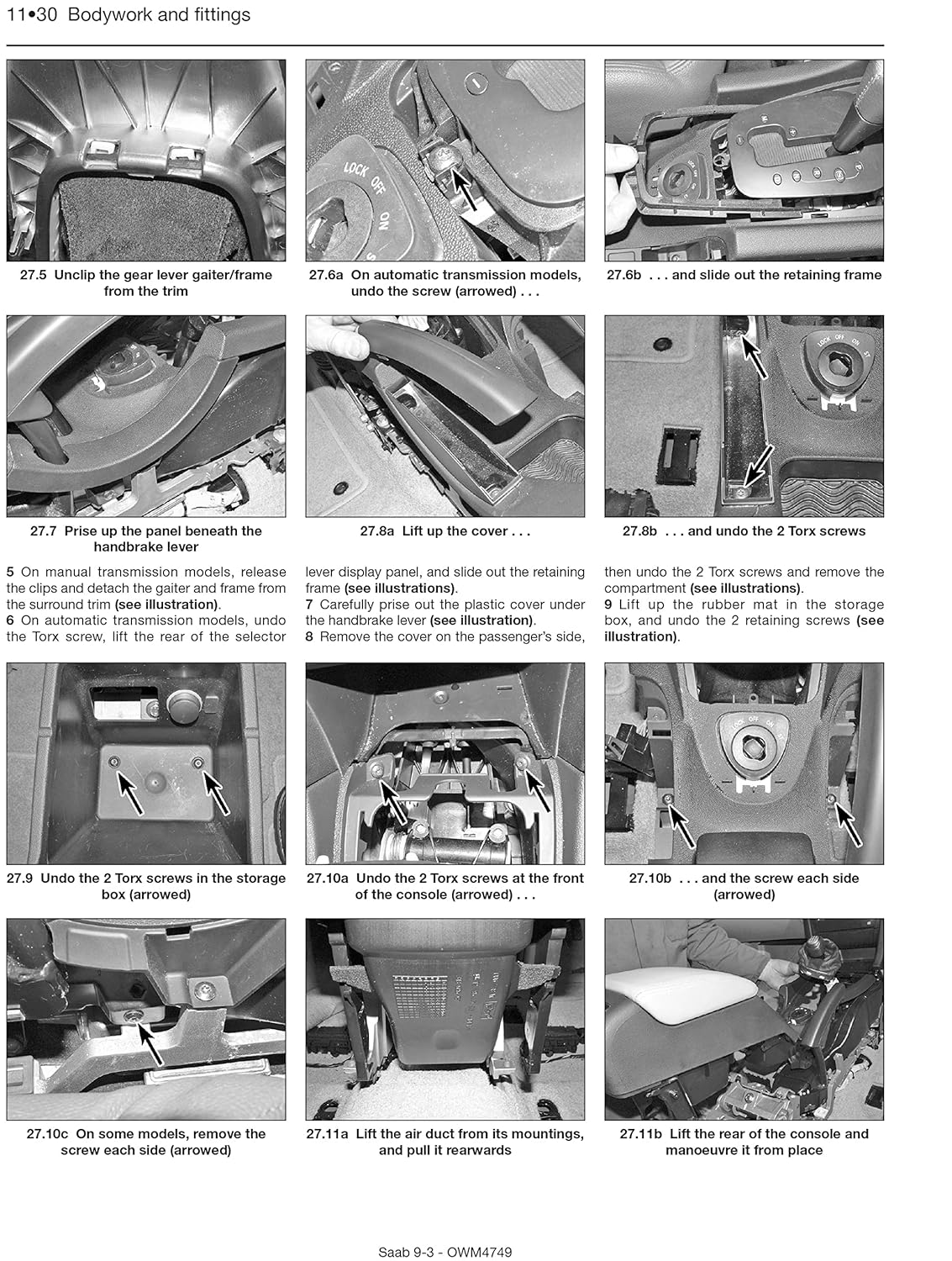
Figure 8: A page detailing Diesel DOHC engine in-car repair procedures. It includes images for withdrawing camshaft followers (11.3a), hydraulic tappets (11.3b), clipping the follower back onto the tappet (11.6a), and refitting the tappet (11.6b). Also shown are steps for disconnecting coolant hoses (12.6), releasing the coolant pipe (12.7), and undoing the bolt for the high-pressure fuel pump mounting bracket (12.8).
Camshaft Followers and Hydraulic Tappets - Removal, Inspection and Refitting
The manual provides detailed steps for removing, inspecting, and refitting camshaft followers and hydraulic tappets, including instructions for keeping parts organized and checking for wear.
Cylinder Head - Removal and Refitting
Instructions for cylinder head removal and refitting are provided, including disconnecting various components like coolant hoses and the high-pressure fuel pump mounting bracket.
Troubleshooting
The manual includes a dedicated "Fault Finder" section designed to help diagnose common problems. This section provides guidance on identifying symptoms and pinpointing potential causes, saving time and effort in the repair process.
Refer to the "Fault finding" section within the manual for specific diagnostic charts and procedures.
Specifications
Key specifications for the Saab 9-3 models covered by this manual are listed below for quick reference.
| Specification | Detail |
|---|---|
| Publisher | J H Haynes & Co Ltd |
| Publication Date | April 17, 2015 |
| Language | English |
| ISBN-10 | 1785210076 |
| ISBN-13 | 978-1785210075 |
| Item Weight | 2.31 pounds |
| Dimensions | 8.27 x 0.63 x 10.63 inches |


