
1. Introduction
This laboratory manual is designed to accompany the textbook Electronic Devices, Tenth Edition, Global Edition, by Thomas L. Floyd. It provides seventeen experiments directly coordinated with the textbook chapters, offering practical application of theoretical concepts.
Each experiment is structured into two or three independent parts, allowing instructors flexibility in assigning content based on course objectives and available laboratory time. The manual aims to enhance understanding through hands-on experience with electronic devices.
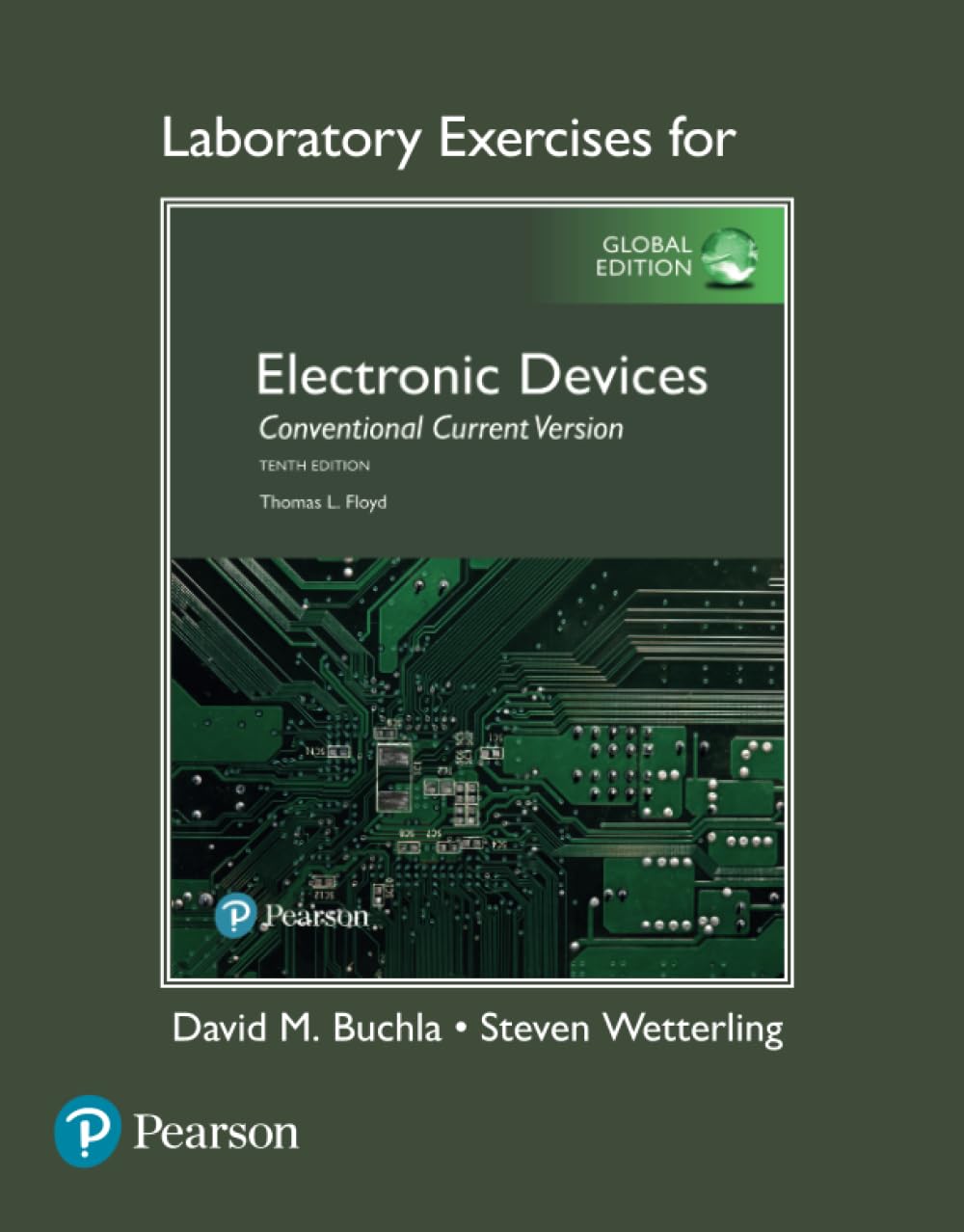
Figure 1.1: Front cover of the Pearson Lab Manual for Electronic Devices, Global Edition. This image displays the title, "GLOBAL EDITION", and a globe icon, indicating its international scope.
2. Using This Manual
The experiments in this manual are directly linked to the chapters of the Electronic Devices textbook. Each chapter corresponds to a specific experiment, which may contain multiple independent parts. This modular design allows for adaptable laboratory sessions.
Device Applications discussed in the textbook often have an experimental component, indicated by a specific icon within this manual, to bridge theoretical knowledge with practical laboratory work. Many experiments also include a Multisim component, with circuit files available for download from the publisher's website.
- Chapter Coordination: Experiments align with textbook chapters.
- Independent Parts: Most experiments are divided into 2-3 parts that can be performed independently.
- Multisim Integration: Access Multisim circuit files for selected experiments online.
3. Experiment Types (A and B Options)
Experiments 12 through 16 offer a dual-track approach, labeled as 'A' and 'B', providing flexibility in experimental methodology:
- A Experiments: These experiments utilize traditional discrete components and operational amplifiers (op-amps) on standard protoboards. They are suitable for programs emphasizing conventional electronic devices.
- B Experiments: These experiments incorporate a programmable Analog Signal Processor (ASP) module. The ASP allows for the implementation of equivalent circuits using dynamically programmable analog signal processing, controlled by Computer Aided Design (CAD) software.
The manual provides detailed procedures for programming the ASP, including a software tutorial. Experiment 12-B, Part 1, serves as a software tutorial and should be completed before other B experiments. Similarly, the initial steps of Experiment 15-B, Part 2, offer a tutorial for the AnadigmFilter program.
4. Software and Online Resources
To fully utilize this manual, access to specific software and online resources is recommended:
- Multisim Components: Circuit files for Multisim are available on the Pearson Global Editions website. Visit www.pearsonglobaleditions.com/Floyd for downloads.
- Anadigm CAD Software: The programmable Analog Signal Processor (ASP) used in B experiments is controlled by free CAD software from Anadigm. This software can be downloaded from www.anadigm.com. The AnadigmDesigner2 (AD2) CAD software includes the AnadigmFilter program, a powerful active filter design tool.
No additional hardware is required for the initial software tutorials for the ASP technology, only a computer with the downloaded software.
5. Product Specifications
| Title | Lab manual for Electronic Devices, Global Edition |
| Author | Thomas Floyd |
| Publisher | Pearson |
| Publication Date | June 19, 2018 |
| Edition | 10th edition |
| Language | English |
| Print Length | 272 pages |
| ISBN-10 | 129224934X |
| ISBN-13 | 978-1292249346 |
| Item Weight | 1.33 pounds |
| Dimensions | 8.5 x 0.62 x 10.87 inches |

Figure 5.1: Back cover of the Pearson Lab Manual. This image displays the ISBN barcodes and additional publisher information, including the website www.pearsonglobaleditions.com.
6. Support and Important Information
6.1 Publisher Information
This manual is published by Pearson. For general inquiries or support related to the content, please refer to the official Pearson website or contact their educational support channels.
Pearson Global Edition Website: www.pearsonglobaleditions.com
6.2 Special Edition Notice
This is a special edition intended for students outside the United States and Canada. If this book was purchased within the United States or Canada, it might have been imported without the approval of the Publisher or Author. Users should be aware of this distinction.