
Interweave Pr 0934026440
Twined Knitting: A Swedish Folkcraft Technique
Instruction Manual for the English and Swedish Edition
Introduction
This manual provides comprehensive guidance on the art of twined knitting, a traditional Swedish folkcraft technique. It delves into the historical context and practical application of this unique knitting method, offering detailed instructions for both novice and experienced knitters.
The technique involves knitting with two strands of yarn simultaneously, twisting them around each other to create a dense, durable, and often reversible fabric. This method is particularly well-suited for creating warm garments and accessories.
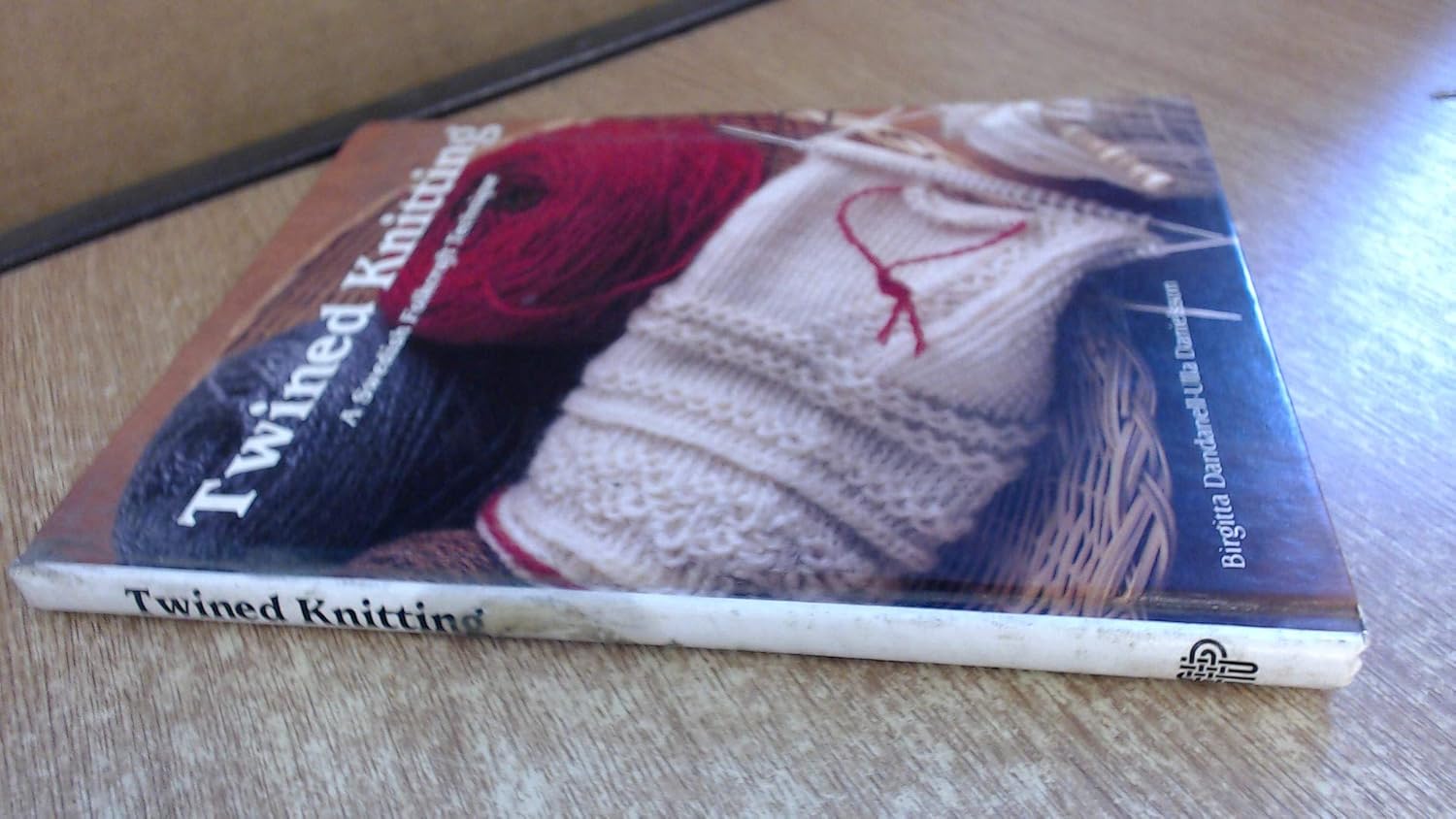
Figure 1: The cover of the "Twined Knitting" book, featuring an example of twined knitting and knitting materials.
1. Setup: Materials and Tools
Before beginning any twined knitting project, ensure you have the appropriate materials and tools. The quality and type of these items will significantly impact the outcome of your work.
1.1 Yarn Selection
Traditional twined knitting often utilizes wool yarn due to its elasticity and warmth. It is recommended to use two strands of yarn of similar weight. Consider the fiber content, ply, and color for your desired project.
- Wool Yarn: Ideal for warmth and durability.
- Yarn Weight: Typically worsted or aran weight for traditional projects.
- Color: Two contrasting or complementary colors are often used to highlight the twined texture.
1.2 Needle Requirements
The choice of knitting needles depends on the yarn weight and desired fabric density. Double-pointed needles (DPNs) or circular needles are commonly used for working in the round, which is typical for many twined knitting projects.
- Needle Size: Refer to pattern recommendations, typically 3.5mm to 5.5mm (US 4 to US 9).
- Needle Type: DPNs for small circumference items, circular needles for larger items.
1.3 Additional Tools
- Stitch Markers: To mark the beginning of rounds or pattern repeats.
- Tapestry Needle: For weaving in ends.
- Scissors: For cutting yarn.
- Measuring Tape: For checking gauge and dimensions.
2. Operating: Techniques and Patterns
This section outlines the fundamental techniques and common patterns used in twined knitting. Mastery of these basic steps is crucial for successful project completion.
2.1 Basic Twined Stitch
The core of twined knitting involves twisting the two working yarns around each other before forming each stitch. This creates the characteristic dense fabric.
- Hold one strand of yarn (Yarn A) in front and the other (Yarn B) behind.
- Insert the right needle into the next stitch as if to knit.
- Bring Yarn A under Yarn B, then over Yarn B.
- Wrap Yarn A around the needle and pull through the stitch.
- Drop the original stitch from the left needle.
2.2 Casting On and Binding Off
Specific methods for casting on and binding off are often employed to maintain the elasticity and appearance consistent with twined knitting.
- Twined Cast-On: Creates a firm, elastic edge.
- Elastic Bind-Off: Ensures the finished edge matches the fabric's stretch.
2.3 Common Projects
The book provides detailed instructions for various traditional twined knitting projects, including:
- Mittens and Gloves: Known for their warmth and durability.
- Stockings: Often featuring intricate patterns.
- Jackets and Caps: Demonstrating the versatility of the technique for larger garments.
3. Maintenance: Care of Twined Knits
Proper care ensures the longevity and appearance of your twined knitted items. Due to the dense nature of the fabric, specific washing and drying methods are recommended.
3.1 Washing Instructions
Most twined knits, especially those made from wool, should be hand-washed to prevent felting and maintain shape.
- Fill a basin with lukewarm water and a small amount of wool-friendly detergent.
- Submerge the item and gently squeeze to allow water to penetrate. Avoid agitation.
- Rinse thoroughly with lukewarm water until all soap is removed.
3.2 Drying Instructions
Never wring or hang twined knits, as this can distort their shape. Always dry flat.
- Gently press excess water from the item by rolling it in a clean towel.
- Lay the item flat on a clean, dry surface, reshaping it to its original dimensions.
- Allow to air dry completely, turning occasionally to ensure even drying.
4. Troubleshooting Common Issues
Even experienced knitters may encounter challenges. This section addresses common problems and provides solutions to help you overcome them.
4.1 Uneven Tension
If your fabric appears uneven or has inconsistent stitch size, it may be due to varying tension while knitting.
- Solution: Practice maintaining a consistent grip on the yarn and needles. Consider trying different yarn holding techniques.
4.2 Twists Not Visible
If the characteristic twists of twined knitting are not prominent, the yarns may not be twisted sufficiently between stitches.
- Solution: Ensure you are consistently bringing one yarn under and over the other before forming each stitch.
4.3 Fabric Too Stiff or Too Loose
The density of twined knitting can vary based on yarn and needle choice, and personal tension.
- Solution: Adjust needle size. Use smaller needles for a denser fabric, larger needles for a looser fabric. Always swatch to check gauge.
5. Specifications
This section provides key details about the "Twined Knitting: A Swedish Folkcraft Technique" book.
| Attribute | Detail |
|---|---|
| Title | Twined Knitting : A Swedish Folkcraft Technique (English and Swedish Edition) |
| Authors | Birgitta Dandanell, Ulla Danielsson |
| Publisher | Interweave Pr |
| Publication Date | January 1, 1989 |
| Language | English, Swedish |
| Print Length | 119 pages |
| ISBN-10 | 0934026440 |
| ISBN-13 | 978-0934026444 |
| Item Weight | 1.04 pounds |
| Dimensions | 7.25 x 0.5 x 10 inches |
6. Warranty and Support
As this product is a published book, standard product warranties and dedicated technical support services typically do not apply. For inquiries regarding the content or errata, please refer to the publisher's contact information if available within the book itself.
For general information about twined knitting or related craft techniques, consider consulting local knitting guilds, online forums, or additional published resources.