
Microsoft Press 0735663777
Windows via C/C++ Instruction Manual
Model: 0735663777
Introduction
This manual provides comprehensive guidance for mastering application development with unmanaged C++ code on Windows operating systems. It covers essential concepts and advanced techniques for programming Windows-based applications, including those for Windows XP, Windows Vista, and Windows Server 2008.
Authored by Jeffrey Richter and Christophe Nasarre, this resource is designed for developers seeking in-depth knowledge of Windows internals and system programming.
Product Overview
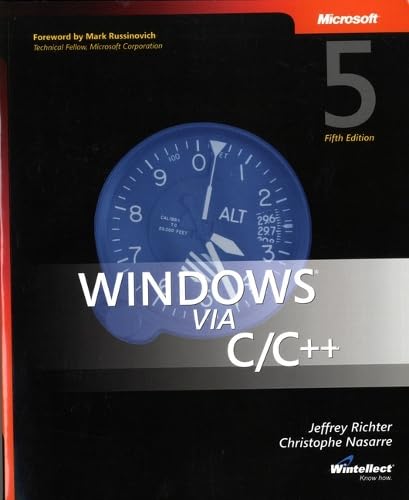
Figure 1: Front cover of the "Windows via C/C++" book. This image displays the book's title, authors (Jeffrey Richter and Christophe Nasarre), and the edition number (Fifth Edition), along with a graphic resembling an altimeter.
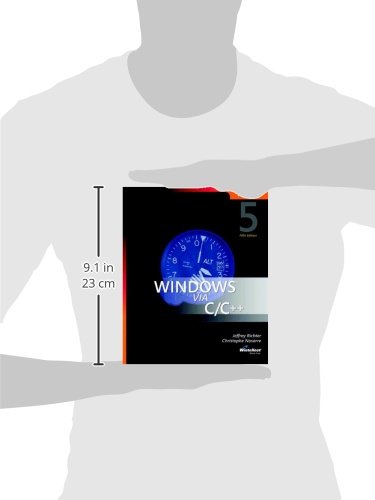
Figure 2: Side view of the "Windows via C/C++" book, illustrating its physical dimensions. The image shows the book's height as approximately 9.1 inches (23 cm), providing a visual reference for its size.
This book, "Windows via C/C++", is a comprehensive guide for developers. It is presented in a softcover format, designed for durability and ease of use. The content is structured to provide a deep understanding of Windows operating system functionalities from a C/C++ programming perspective.
Setup (Prerequisites)
To effectively utilize the information and code samples provided in this manual, users should have a foundational understanding of C/C++ programming. Familiarity with basic operating system concepts is also beneficial.
- Programming Language: Proficiency in C/C++.
- Development Environment: A C++ compiler and an Integrated Development Environment (IDE) compatible with Windows application development (e.g., Microsoft Visual Studio).
- Operating System: Windows XP, Windows Vista, or Windows Server 2008 (or later versions for conceptual understanding).
Operating (Usage Guidelines)
This manual is structured to guide you through various aspects of Windows application development. Each chapter focuses on specific topics, providing detailed explanations and code examples.
Key Areas Covered:
- Application Architecture: Guidance on designing and implementing applications for both 32-bit and 64-bit Windows environments.
- Process and Job Management: Instructions on creating, manipulating, and managing processes and jobs within Windows.
- Thread Management: Techniques for scheduling, managing, synchronizing, and destroying threads.
- Device I/O Operations: How to perform asynchronous and synchronous device I/O operations using the I/O completion port.
- Memory Allocation: Various methods for allocating memory, including virtual memory, memory-mapped files, and heaps.
- Thread Stacks: Manipulating the default committed physical storage of thread stacks.
- DLL Development: Building Dynamic Link Libraries (DLLs) for delay-loading, API hooking, and process injection.
- Exception Handling and Recovery: Utilizing structured exception handling, Windows Error Recovery, and Application Restart services.
It is recommended to read chapters sequentially for a foundational understanding, or refer to specific sections as needed for targeted information.
Maintenance (Updates and Revisions)
This manual is the Fifth Edition, revised for Windows XP, Windows Vista, and Windows Server 2008. While the core principles of Windows programming remain consistent, operating systems evolve. Users are encouraged to consult official Microsoft documentation and developer resources for the latest updates and best practices relevant to newer Windows versions.
Regularly reviewing the official documentation for the specific Windows version you are targeting will ensure your applications remain compatible and optimized.
Troubleshooting (Common Issues)
While this manual provides extensive information, complex programming tasks can lead to issues. Here are general troubleshooting approaches:
- Compilation Errors: Carefully review compiler output messages. Ensure all necessary libraries and headers are correctly linked and included.
- Runtime Errors: Utilize debugging tools provided by your IDE (e.g., Visual Studio Debugger) to step through code, inspect variable values, and identify the source of errors.
- Memory Leaks/Corruptions: Pay close attention to memory management practices detailed in the book. Tools like Valgrind (for Linux, but similar concepts apply to Windows memory debuggers) or built-in Windows debugging features can help identify these.
- Thread Synchronization Issues: Review sections on thread synchronization carefully. Deadlocks or race conditions often stem from incorrect use of mutexes, semaphores, or critical sections.
- API Misuse: Refer to the official Microsoft Developer Network (MSDN) documentation for precise usage of Windows API functions.
For specific code-related issues, cross-referencing with the book's examples and understanding the underlying Windows mechanisms is crucial.
Specifications
| Attribute | Detail |
|---|---|
| Title | Windows via C/C++ (softcover) |
| Authors | Jeffrey Richter, Christophe Nasarre |
| Publisher | Microsoft Press |
| Publication Date | September 25, 2011 |
| Edition | Fifth |
| Language | English |
| Print Length | 854 pages |
| ISBN-10 | 0735663777 |
| ISBN-13 | 978-0735663770 |
| Item Weight | 3.1 pounds |
| Dimensions | 7.38 x 1.69 x 9 inches |
| Part of Series | Developer Reference |
Support
For technical support related to the concepts and code presented in this manual, it is recommended to consult the official documentation from Microsoft and relevant developer communities. The authors, Jeffrey Richter and Christophe Nasarre, are recognized experts in the field, and their respective professional websites or forums may offer additional resources.
As this is a published book, direct product support is typically not provided by the publisher for individual programming queries. However, errata or supplementary materials might be available on the publisher's or authors' websites.
- Publisher: Microsoft Press
- Authors' Resources: Refer to Jeffrey Richter's and Christophe Nasarre's professional websites or associated communities for further insights.
- Online Communities: Programming forums and Q&A sites (e.g., Stack Overflow) are excellent resources for specific C/C++ and Windows API questions.
Warranty Information
As a published book, "Windows via C/C++" does not typically come with a software or hardware warranty. The content is provided for informational and educational purposes. Any code examples are provided "as is" without warranty of any kind, either express or implied, including but not limited to the implied warranties of merchantability and fitness for a particular purpose.
For issues related to the physical book (e.g., printing errors, damaged pages), please contact the retailer or publisher directly with your proof of purchase.