
Introduction to Modern Industrial Electronics
This manual provides guidance for utilizing the "Modern Industrial Electronics, Fifth Edition" textbook by Timothy J. Maloney. The book offers a detailed explanation of whole-system structures and relationships within industrial electronics, moving beyond isolated circuits or devices. It focuses on demonstrating how modern electronic devices are applied in realistic industrial settings, aiming to equip readers with the necessary skills for professional responsibilities.
The content thoroughly examines a wide array of systems, ranging from Programmable Logic Controllers (PLCs) to industrial robots. It also incorporates essential background information concerning the economic importance and environmental impact of production processes relevant to these systems. This resource is designed for Industrial Electronics Technicians and Engineering Technologists seeking current information on practical industrial applications of modern electronics.
About the Author
The author of "Modern Industrial Electronics, Fifth Edition" is Timothy J. Maloney. His expertise is reflected in the book's comprehensive approach to industrial electronics, emphasizing practical applications and system-level understanding.
Book Specifications
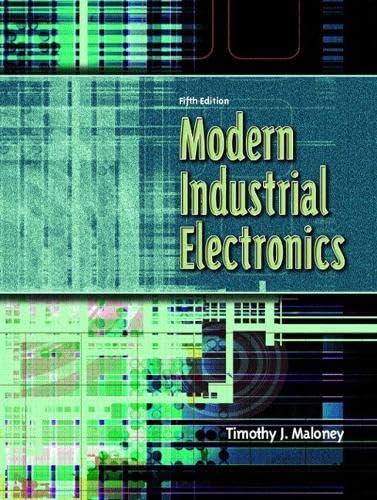
Image: Front cover of "Modern Industrial Electronics, Fifth Edition" by Timothy J. Maloney. The image includes a visual representation of the book's dimensions, indicating a height of 10 inches (25 cm).
| Specification | Detail |
|---|---|
| Publisher | Prentice Hall |
| Publication Date | July 30, 2003 |
| Edition | Fifth Edition (Subsequent) |
| Language | English |
| Print Length | 976 pages |
| ISBN-10 | 0130487414 |
| ISBN-13 | 978-0130487414 |
| Item Weight | 4.3 pounds |
| Dimensions | 8 x 1.5 x 10 inches |
Effective Usage Guidelines
To maximize your learning and reference experience with "Modern Industrial Electronics, Fifth Edition," consider the following guidelines:
- Systematic Reading: Begin by reviewing chapter objectives and summaries. Read through each chapter section by section, ensuring comprehension before moving forward.
- Engage with Examples: The book includes numerous examples. Work through these examples independently to solidify your understanding of concepts and applications.
- Practice Problems: Utilize any provided practice problems or end-of-chapter questions to test your knowledge and problem-solving skills.
- Reference Diagrams and Illustrations: Pay close attention to circuit diagrams, flowcharts, and other illustrations. These visual aids are crucial for understanding complex systems and processes.
- Cross-Referencing: When encountering unfamiliar terms or concepts, use the book's index or glossary (if available) to cross-reference and gain further clarity.
- Application Focus: The book emphasizes realistic industrial applications. Reflect on how the theoretical concepts translate into practical scenarios in industrial settings.
Care and Maintenance
Proper care of your textbook will ensure its longevity and readability:
- Storage: Store the book in a dry, cool place away from direct sunlight to prevent page yellowing and cover degradation.
- Handling: Handle the book with clean hands. Avoid bending the cover excessively or forcing the spine open, which can damage the binding.
- Protection: Consider using a book cover to protect against spills, tears, and general wear and tear, especially if transporting the book frequently.
- Marking: Use pencils for notes and highlighting, as ink can bleed through pages or become permanent. Erase pencil marks gently.
Troubleshooting and Support
While this textbook is a valuable resource, you may encounter situations requiring clarification or addressing physical quality concerns:
- Conceptual Difficulty: If a concept remains unclear after reading, try re-reading the section, consulting supplementary materials, or discussing it with an instructor or study group.
- Illegible Text/Diagrams: Some printings, particularly paperback versions, may have issues with light blue text or diagrams appearing too faint. If you encounter such issues that hinder your ability to read critical information, consider contacting the retailer or publisher for assistance or exploring alternative formats (e.g., digital versions, different print runs).
- Binding Issues: Reports indicate that some copies, especially paperback, may experience pages detaching from the binding. If your book exhibits significant binding failure shortly after purchase, it is advisable to contact the point of purchase for a replacement or refund.
For further support regarding the content or specific errata, please refer to the publisher's official website or contact Prentice Hall directly.